November MusicFest video
The Winter Concert video is ready
BYMT news

Get ready for a fantastic showcase of sounds at BYMT! 🎶
We’re starting off with a spectacular trio of events: our Festival of Bands, Festival of Orchestra, and Festival of Choirs. These incredible showcases are just around the corner, and tickets are available now at www.bymt.co.uk/events — don’t miss out!
Then we journey deep into the Underworld with our Musical Theatre Production of HADESTOWN, before swapping fire for frost in our Junior Musical Theatre Production of FROZEN. ❄️
These hugely popular shows always sell fast, so be sure to book early at www.bymt.co.uk/events.
This Easter, join us for BYMT EASTER SOUNDS! Perfect for young musicians in school years 3–7—whether they’re just beginning their musical adventure or already confidently playing. We’re offering exciting courses in Strings, Brass, Woodwind, Keyboards, Piano, and Ukulele.
Find out more and register at http://www.bymt.co.uk/sounds.
We’d also love your support for our Marathon Heroes, Rodney & Tim, as they take on the London Marathon in aid of BYMT. 🏃♂️🏃♂️
Every donation, big or small, helps fuel their journey. Contribute via https://tinyurl.com/teambymt or contact linda@bymt.co.uk for more ways to get involved.
And make sure to save the date: The BYMT Garden Party – Sunday 5th July
A joyful day of live music from all our bands, groups, and orchestras—bring your friends, family, and sunshine vibes!
To hear all our musical news following us on Facebook and Instagram: @bromleyyouthmusic


Read the article here

Read the article here
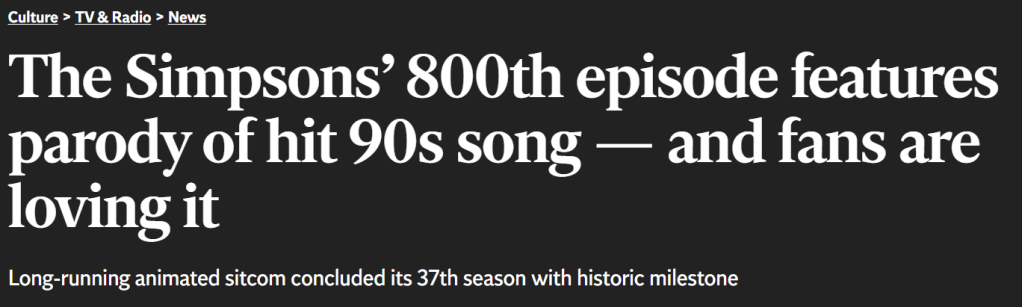
Read the article here
Reading Essentials for Aspiring Composers
Here is a selection of books which are tried and tested by creatives which focus on specific areas such as orchestration, notation and productivity, or provide an informative overview of the overall compositional practice.
Orchestration
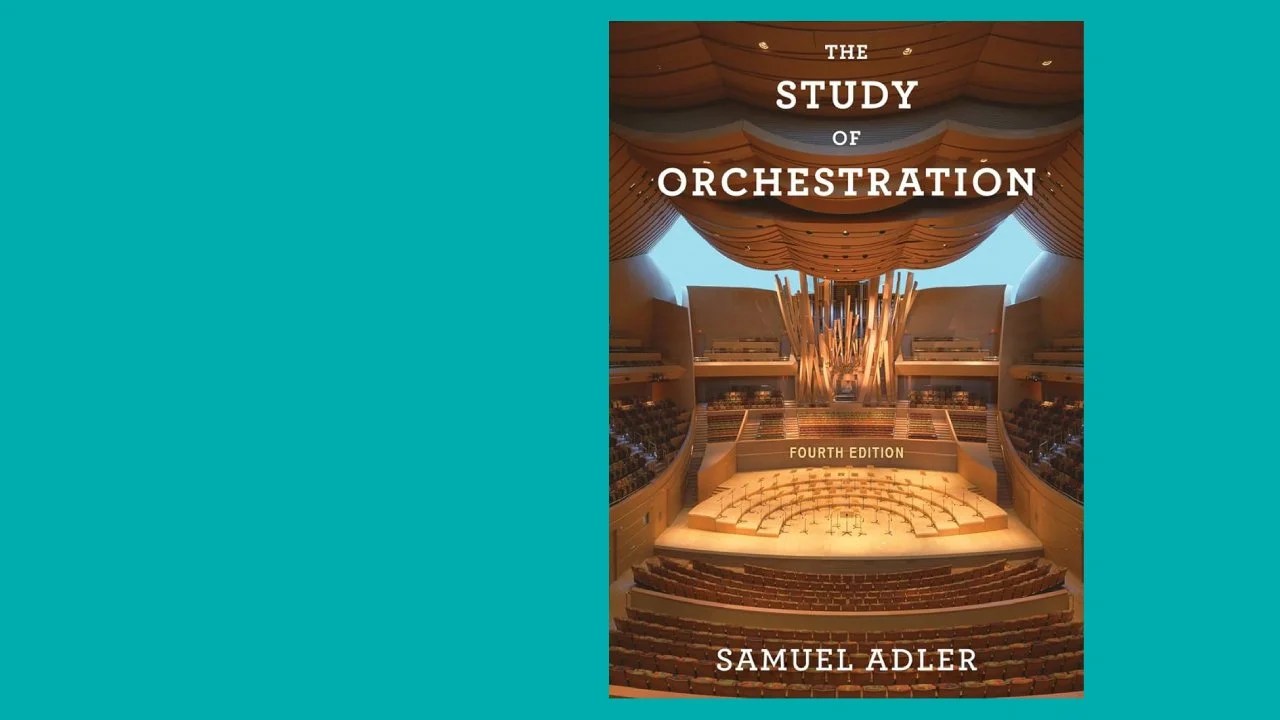
The Study of Orchestration Samuel Adler, published in 2016 by W. W. Norton and Company
Written by a renowned composer whose works have been performed by major orchestras around the world, The Study of Orchestration is the only text that explores the characteristics of orchestral instruments and shows how a master composer approaches orchestration.
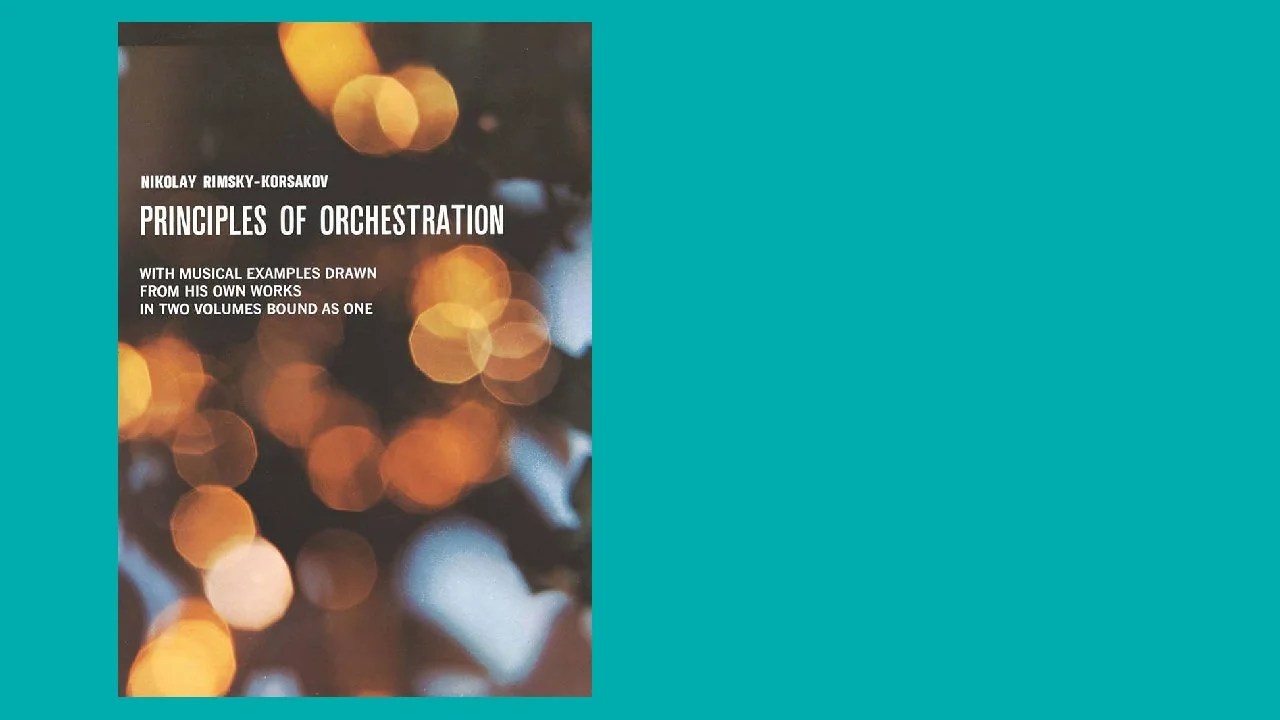
Principles of Orchestration Nikolay Rimsky Korsakov, published in 1965 by Dover Publications Ltd.
This book will undoubtedly be of value to any composer. In it, Korsakov aims to provide the reader with the fundamental principles of modern orchestration from the standpoint of brilliance and imagination, and he devotes considerable space to the study of tonal resonance and orchestral combination. In his course, he demonstrates such things as how to produce a good-sounding chord of certain tone-quality, uniformly distributed; how to detach a melody from its harmonic setting; correct progression of parts; and other similar problems.
Harmony & Counterpoint
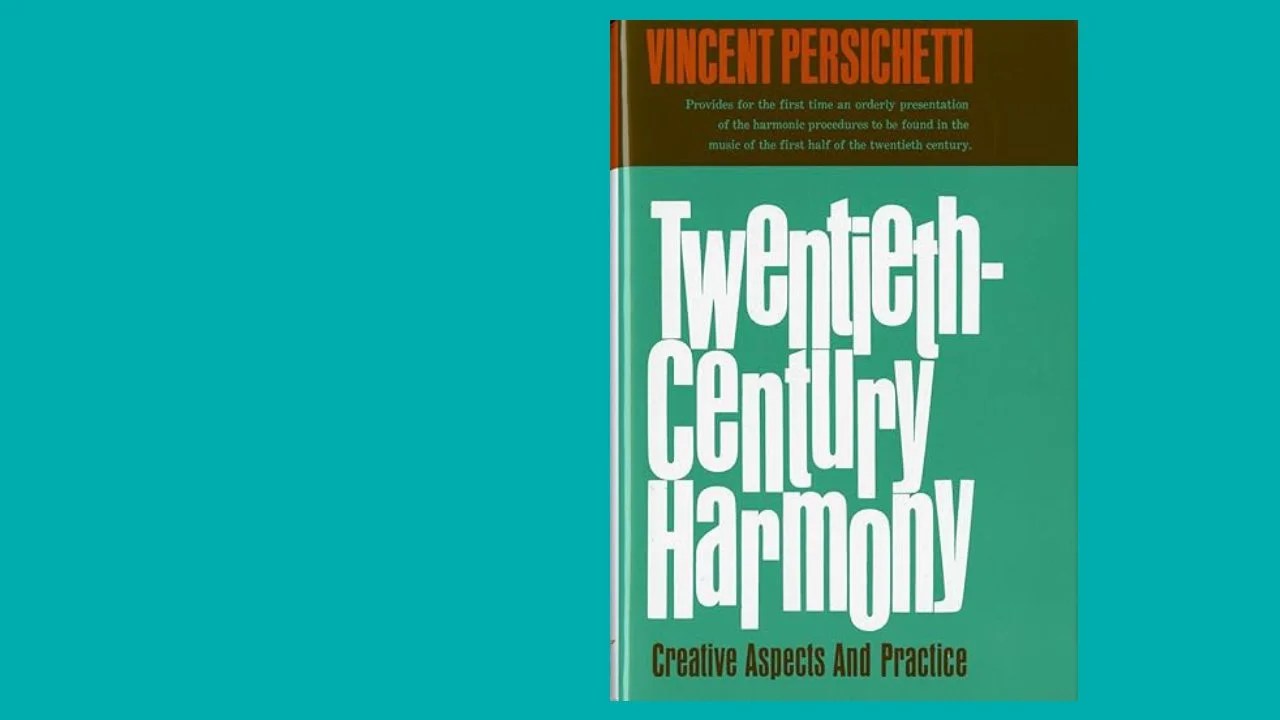
20th Century Harmony: Creative Aspects and Practices Vincent Persichetti, published in 1961 by W. W. Norton & Company.
Here for the first time is an orderly presentation of the harmonic procedures to be found in music of the first half of the twentieth-century. The author examines the nature of intervals in various contexts, discusses the modes and other scales employed in modern music, describes the formation and uses of chords by thirds, by fourths, and by seconds, of added-note chords and polychords; he deals with different types of harmonic motion, with harmonic rhythm and dynamic sand ornamentation, with harmonic behaviour in tonality, polytonality, atonality and serial composition.
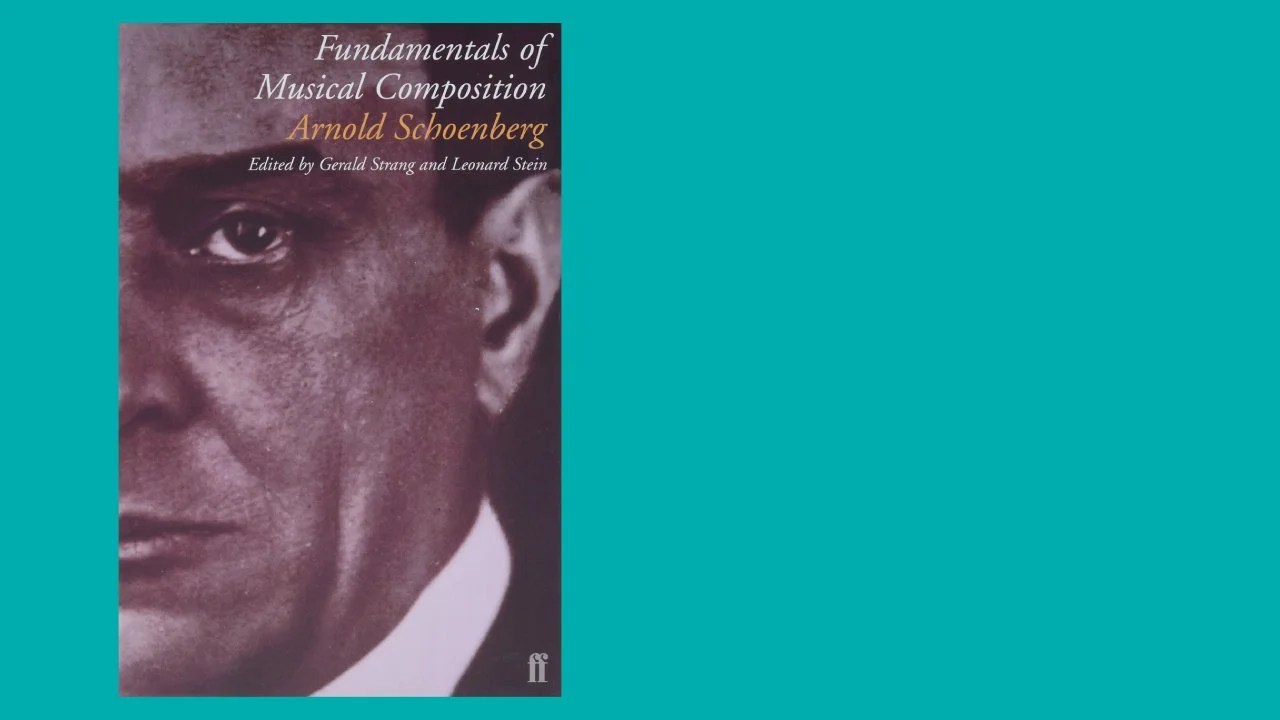
Fundamentals of Music Composition Arnold Schoenberg, published in 1999 by Faber & Faber
This book represents the culmination of more than forty years in Schoenberg’s life devoted to the teaching of musical principles to students and composers in Europe and America. For his classes he developed a manner of presentation in which ‘every technical matter is discussed in a very fundamental way, so that at the same time it is both simple and thorough’.
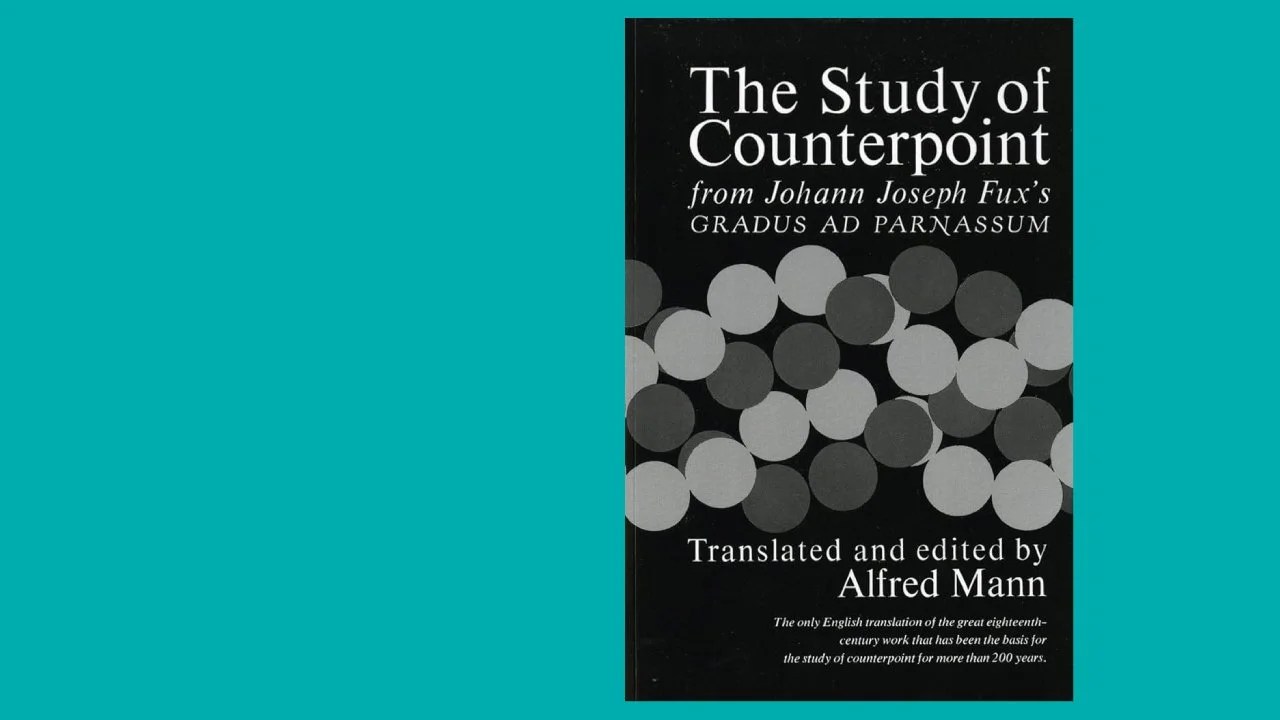
The Study of Counterpoint Johann Joseph Fux, published in 1965 by W. W. Norton & Company
The most celebrated book on counterpoint is Fux’s great theoretical work Gradus ad Parnassum. Since its appearance in 1725, it has been used by and has directly influenced the work of many of the greatest composers. J. S. Bach held it in high esteem, Leopold Mozart trained his famous son from its pages, Haydn worked out every lesson with meticulous care, and Beethoven condensed it into an abstract for ready reference.
Notation

Behind Bars Elaine Gould, published in 2011 by Faber Music
This is the indispensable reference book for composers, arrangers, teachers and students of composition, editors, and music processors. In the most thorough and painstakingly researched book to be published since the 1980s, specialist music editor Elaine Gould provides a comprehensive grounding in notational principles. It covers everything from basic rules, conventions and themes to complex instrumental techniques, empowering the reader to prepare music with total clarity and precision.
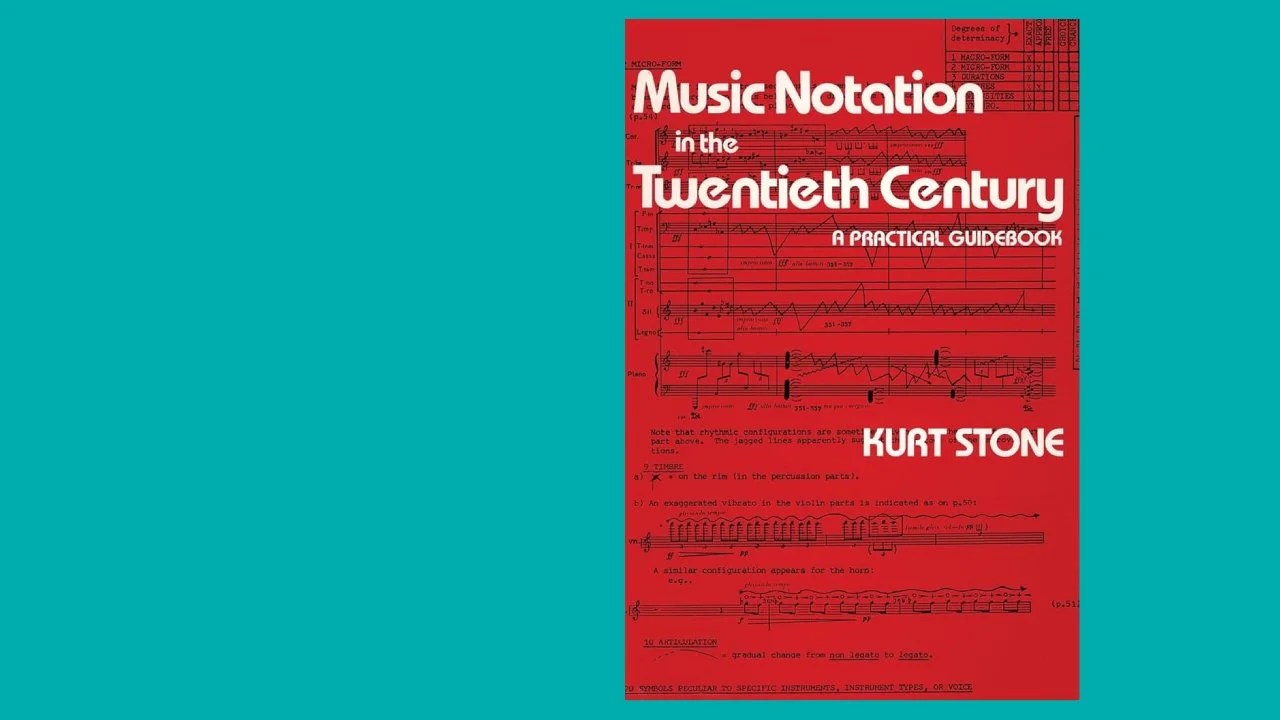
Music Notation in Twentieth Century Kurt Stone, published in 1980 by W. W. Norton & Company
Stone is undoubtedly one of the world’s leading authorities on contemporary music notation and its problems. As head of the Index of New Musical Notation, he collected and categorised the myriad new devices appearing in published music of this century. In collaboration with professional performers and conductors, he evaluated these devices in order to determine their effectiveness in practical application. At the International Conference on New Music Notation 1974, a consensus was sought from the eighty participating musicians from eighteen different countries. The results have been incorporated into this volume in the clearest and most direct way.
How does a harp work?
And finally …
 Hayes Music blog