Sona Jobarteh is a Gambian/British Griot – Griots are West African storytellers and musicians with a rich tradition passed down through families. Sona is the first professional female kora player. A kora is a 21-string harp-like instrument. Here she performs a traditional song from Mali.
Written for the 1962 Bond film Dr No, this has become a truly iconic film theme. Although here it is credited to John Barry, who actually wrote it has been a matter of debate. It is usually credited to Monty Norman, who won a court case establishing that it was he who actually wrote the theme.
Things to notice:
the guitarist playing in this performance is playing a left-handed guitar
there is a split note in the trumpet at 0:52 – this is incredibly high, and extremely demanding for the trumpet players, and just goes to show that even top professionals make mistakes sometimes! The ‘Bond sound’ of the trumpet was originally created by legendary trumpeter Derek Watkins, who played the original theme for Dr No in 1962 and then on every single Bond soundtrack until Skyfall in 2012
Sabre Dance is part of a ballet composed by Armenian composer Aram Khachaturian in 1942. The middle section of the piece is based on an Armenian folk tune.
Armenia was part of the Soviet Union at the time. It is to the east of Turkey, south of Georgia, and north of Iran:
This song was originally recorded in 1971 and was a response to police brutality during an anti-war protest (this was the time of the Vietnam War, and a lot of people were protesting against American involvement in the war). Here are the lyrics:
Mother, mother
There’s too many of you crying
Brother, brother, brother
There’s far too many of you dying
You know we’ve got to find a way
To bring some lovin’ here today, eh eh
Father, father
We don’t need to escalate
You see, war is not the answer
For only love can conquer hate
You know we’ve got to find a way
To bring some lovin’ here today, oh oh oh
Picket lines and picket signs
Don’t punish me with brutality
Talk to me, so you can see
Oh, what’s going on
What’s going on
Yeah, what’s going on
Ah, what’s going on
In the mean time
Right on, baby
Right on brother
Right on babe
Mother, mother, everybody thinks we’re wrong
Oh, but who are they to judge us
Simply ’cause our hair is long
Oh, you know we’ve got to find a way
To bring some understanding here today
Oh oh oh
Picket lines and picket signs
Don’t punish me with brutality
C’mon talk to me
So you can see
What’s going on
Yeah, what’s going on
Tell me what’s going on
I’ll tell you what’s going on, ooh ooh ooh ooh
Right on baby
Right on baby
Every day we will bring you some listening to broaden your cultural horizons and introduce you to lots of different music. Here’s our first piece:
Written by American composer George Gershwin in 1924, Rhapsody in Blue is a concerto-like piece with a piano solo, which brings jazz and classical styles together. Gershwin wrote the first draft on a train journey, and wanted the piece to be a ‘kaleidoscope of all America’.
Listen out for:
the clarinet solo at the start, with a rapid scale (glissando) followed by a slide (portamento) that the clarinettist does with their embouchure (tightening the lips around the mouthpiece)
Here is a clip of (a reduced) Concert Band rehearsing today, so you can get a little taster of what you would have heard in the concert.
There will be more news on here as the situation unfolds.
In the meantime, keep playing and singing, even if you’re only doing it at home! Listen to lots of fabulous new music. We will put some suggestions on here of listening to broaden your musical horizons.
We are so sorry that we have had to cancel our tour to the Netherlands following Boris Johnson’s announcement yesterday. Parents have all been emailed by Mr Whittle. It will take us a while to sort out refunds (and we don’t know yet how much everyone will get back), but we are working on it and will let everyone know as soon as we can.
Your pink tour wristbands will now be a collector’s item for The Tour That Never Was.
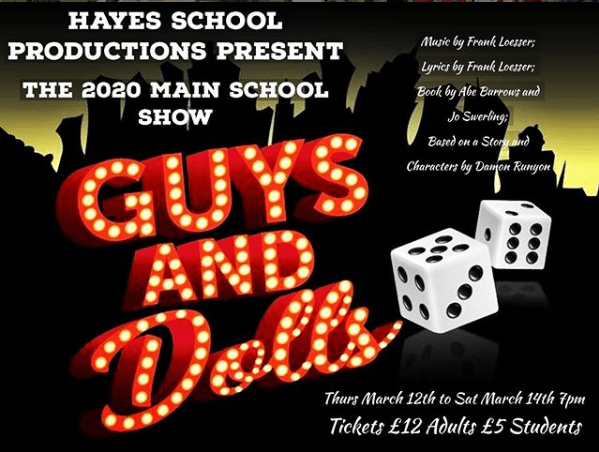
The cast, band, and tech crew are all working their socks off to bring you a truly fabulous show next week! Make sure you get your tickets as soon as possible, because Hayes shows ALWAYS sell out! Don’t miss it!
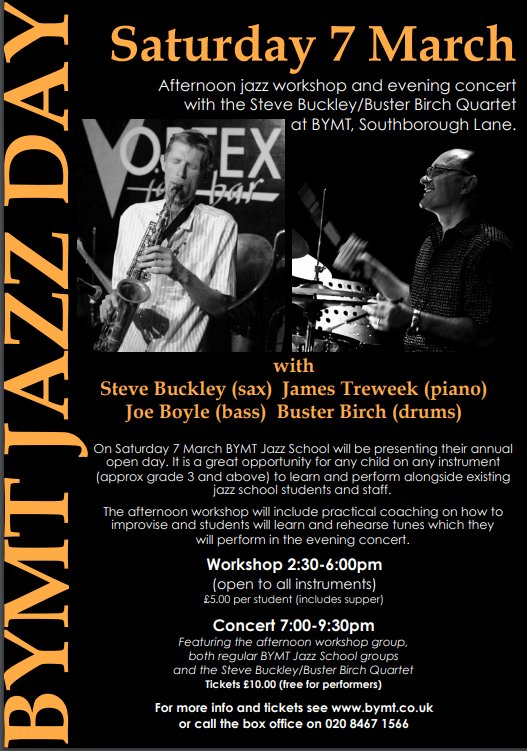
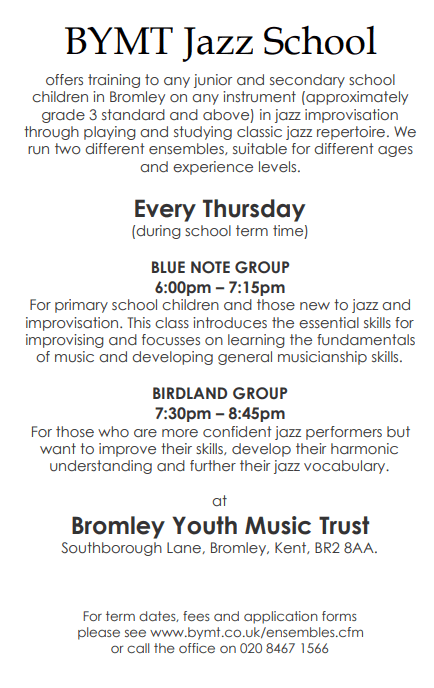
Jazz day at BYMT
This is a tremendous opportunity for anyone interested in learning to play jazz. It says grade 3 minimum, but there really is no upper limit – the fab jazzers organising this will make sure that more advanced players are suitably challenged. It’s only £5 and includes food and a performance – this is an opportunity that is definitely too good to miss!
After half term everything starts to warm up, in every sense:
Guys & Dolls 12-14 March – if you are in the cast, band, or tech team, you know who you are and what rehearsals are involved! You need to get learning everything over half term…
Easter Concert 1st April – this involves all choirs, bands etc. We really need EVERYONE at all rehearsals after half term to make the concert a success
Tour!! 5-9 April – this is another reason we need everyone at rehearsals! There will be a parents’ meeting in the last week of term at some point, to give out all the final details, collect passports and so on (there will be a letter about this)
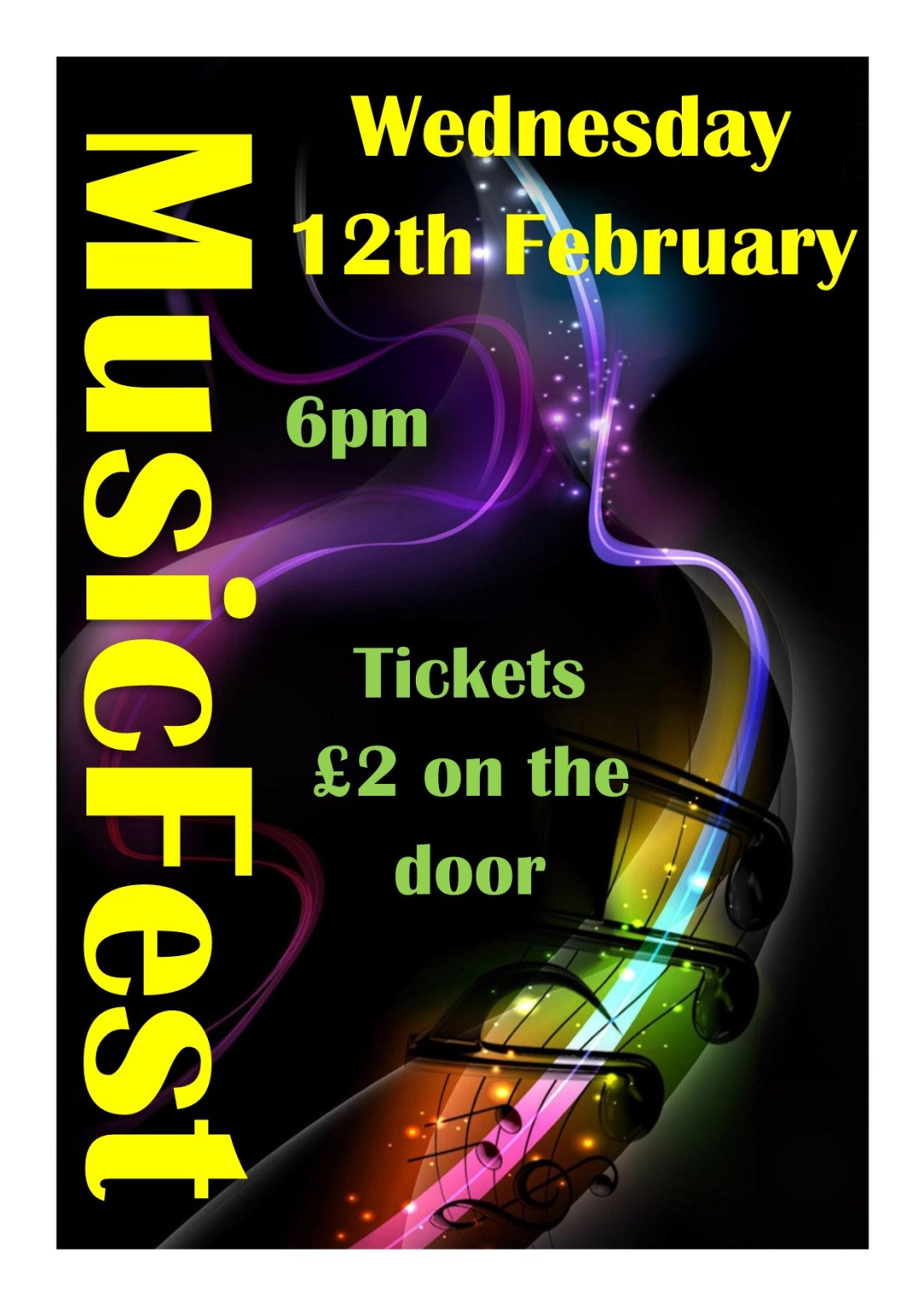
You will be emailed early in the week with a draft programme
You do NOT need to wear school uniform – you can wear whatever you like as long as you look nice
Be in the audience being a lovely supportive audience member for other performers
At the end, take a bow and SMILE to acknowledge your applause
If you are a Music Leader…
Rapid setup needs to take place from 5pm. Things can be located and got out before then, but bear in mind there will be a Guys & Dolls rehearsal in the Hall until 5pm.
We need people to be on the door and run the refreshments
If you have volunteered to be on the Tech Team…
You have been emailed with instructions. Sam will be showing you what to do from 3pm onwards
During MusicFest itself you need to be proactive at the front of the hall as well as at the back, helping people with mics and mic stands – whatever each performer needs
If you are coming to be in the audience…
Remember good audience etiquette, and be aware that you need to respond in different ways to different types of music – you may be clapping or joining in if a performer invites you to, but for some pieces (especially classical ones, or very soft ones) you might need to be completely silent and completely still.



 Hayes Music blog