Giuseppe Domenico Scarlatti (1685 –1757) was an Italian composer from the Baroque period although his music was influential in the development of the Classical style too.
Listen out for this piece’s bell-like quality from the outset and the use of ornaments. Music from this time often featured long flowing melodic lines using ornamentation (decorative notes such as trills and turns).
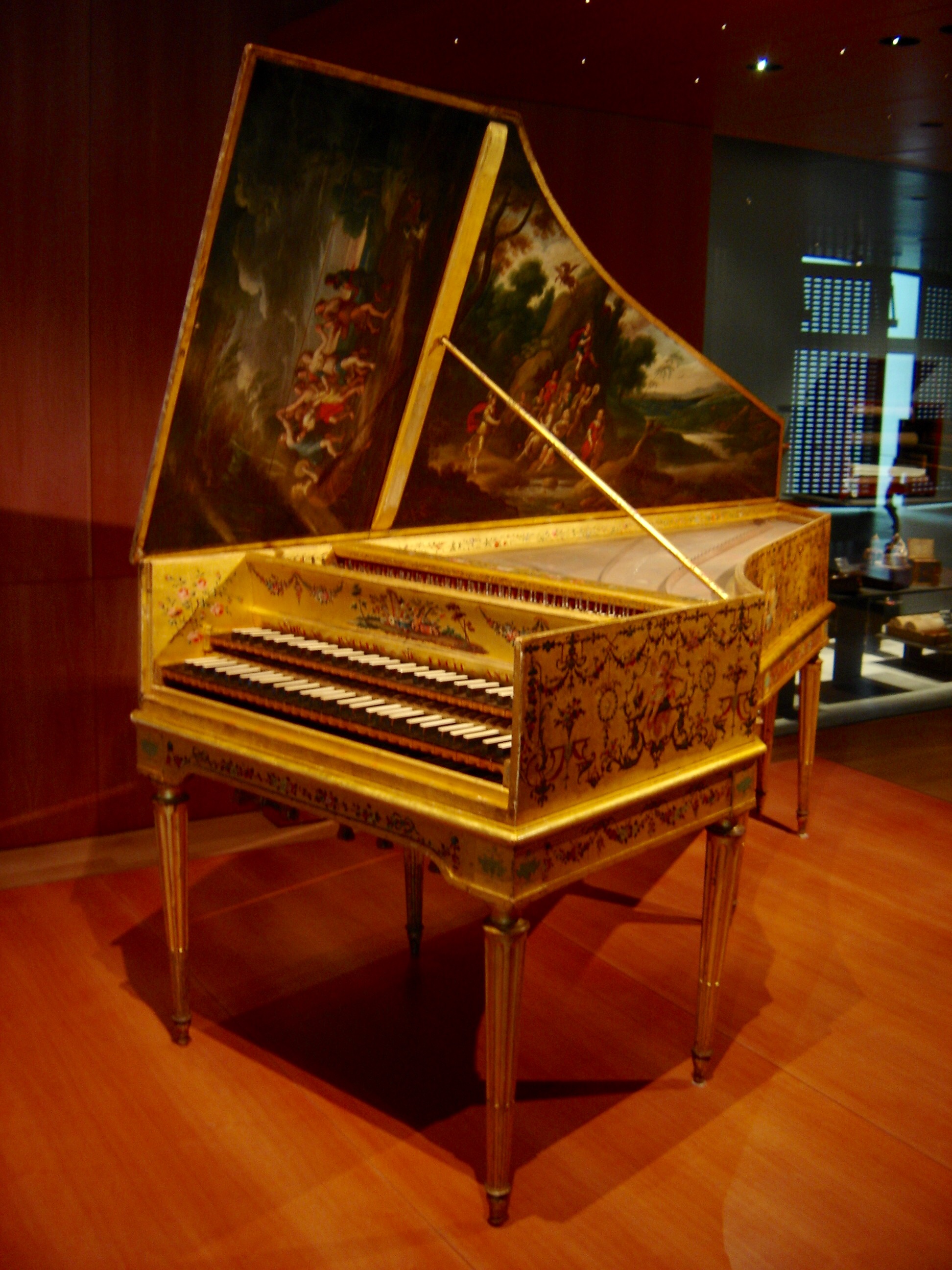
This piece was originally composed for the harpsichord. The harpsichord is a keyboard instrument in which the strings are plucked, rather than hit with a hammer (which is the mechanism for the piano, a more recent development). The distinctive sound of the harpsichord creates an almost immediate association with the Baroque era.
“Baker Street” is a song written and recorded by Scottish singer-songwriter Gerry Rafferty. It was released as a single in 1978.
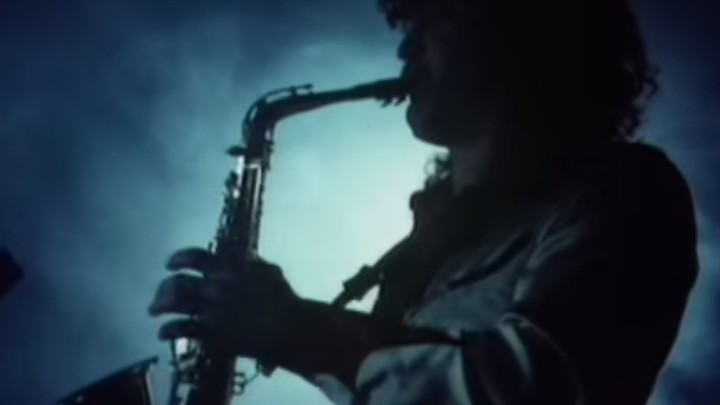
The song features a prominent eight-bar alto saxophone riff played as a break between verses. A riff is a short, repeated melodic pattern, often forming the background to a solo or vocal line.
Raphael Ravenscroft ( 1954 – 2014) was a British musician, composer and author. He is best known for playing the saxophone on “Baker Street”.
The sax riff led to what became known as “the ‘Baker Street’ phenomenon”, a resurgence in the sales of saxophones and their use in mainstream pop music and television advertising.
Georgs Pelēcis (born 1947) is a Latvian composer and musicologist. A musicologist is a person who studies musicology (the history, theory and science of music).
Today’s piece is Concertino bianco (literally ‘Little White Concerto’). It’s name reflects its key signature. It is in the key of C major which means that the piece is played on all white notes as there are no sharps or flats.
Louise Farrenc ( 1804 – 1875) was a French composer, virtuoso pianist and teacher. She studied piano from a young age, and after becoming interested in composing she applied for the prestigious Paris Conservatory, aged 15. She became one of a handful of 19th century women who enjoyed success during their time, rising to prominence in the male dominated world of 19th century music by virtue of her talent and her family’s encouragement and support.
Despite not having the popular profile or pay of her male composer counterparts, Louise Farrenc never gave up writing music. She often protested to the authorities, trying to gain equality for nearly a decade. Louise eventually won her battle for equal pay. In 1842 she became the only woman to be appointed to the position of professor at the Paris Conservatory in the 19th century – the only such appointment for a woman for the entire 19th century.
In 1830, Farrenc produced an important collection of 30 etudes for solo piano. An etude is a short musical composition, typically for one instrument, designed as an exercise to improve the technique or demonstrate the skill of the player. Farrenc wrote these etudes in all the major and minorkey signatures. Key signatures show the key in which the music has been written. The choice of key signature sets the tone for a piece of music.
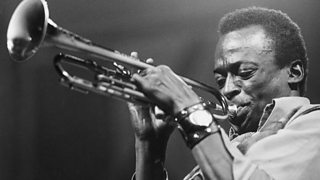
Miles Davis (1926 – 1991) was an American jazz trumpeter, composer and band leader. He was one of the most important figures on the jazz scene and played a large part in introducing several new jazz styles. His album, Kind of Blue, is one of the most widely acclaimed jazz albums of all time.
One of the tracks on his album Kind of Blue is today’s piece calledAll Blues. It is said that not long before the recording took place, Miles Davis gave the players a brief outline of the scales and melodies that they would improvise on. The album was recorded with hardly any rehearsal and today’s piece, All Blues was recorded on only the second take.
Things to listen out for:
The opening bar of the introduction is repeated several times. The snare drum is played using wire brushes swept across the drumhead.
After four bars of the introduction, the 4-bar riff is introduced. The piano, drums and bass continue their ostinati (repeated note pattern) and saxophones are added.
After this riff, the muted trumpet plays the melody. Miles Davis uses a trumpet with a Harmon mute to alter the sound. In the opening bars the trumpet plays legato (smoothly). Listen out for the difference in sound when the mute is removed at 1 min 45.
The blues influence can be heard in the 12-bar blues chord structure and the use of blue notes. Compared with the major scale, some notes, known as blue notes may be flattened by a semitone or ‘bent’ by a smaller interval.
The music is in the Mixolydian mode (the white notes on the piano from G to G). All Blues is sometimes described as modal jazz.
Minor sevenths are added to most of the chords.
Chromatic harmony uses notes from outside the key to colour the chords.
Concierto de Aranjuez (Adagio) By Joaquin Rodrigo. John Williams (guitar), Paul Daniel (conductor) and the BBC Symphony Orchestra at the 2005 Proms.
This is the second movement (Adagio) from the Concierto de Aranjuez, a guitar concerto written by Joaquín Rodrigo in 1939. Rodrigo was a Spanish composer and a virtuoso pianist who lived from 1901 – 1999. This composition is Rodrigo’s best-known work and established his reputation as one of the most significant Spanish composers of the 20th century.
Things to listen out for:
The harmony: it is in a minor key
The tempo: slow pace. Adagio means ‘slowly’ in Italian.
The melody: It is quietly played and introduced by the cor anglais with a soft accompaniment by the guitar and strings. The cor anglais (or English horn in North America), is a double-reed woodwind instrument in the oboe family. Ornamentation is added gradually to the melody. Ornamentation is when notes are added to a melody to decorate it.
Many musicians have since reinterpreted the work such as the jazz musician Miles Davis:
An arrangement of the piece by Kevin Bolton for a brass band led by a flugelhorn was recorded by the Grimethorpe Colliery Band as part of the soundtrack to the excellent 1996 film, Brassed Off (age rating 15). The film is about the troubles faced by a colliery brass band, following the closure of their pit (coal mine). This arrangement is sometimes referred to in jest as the Concierto d’Orangejuice, due to the pronunciation used in the film by actor Pete Postlethwaite.
The Partita No. 3 in E major for solo violin was composed by Johann Sebastian Bach. Today’s piece is the first movement, Preludio (a short introduction).
Preludio
Loure
Gavotte en Rondeau
Menuets (I and II)
Bourrée
Gigue
Bach based the composition on the characters of various dances and set the tone with the high-spirited Preludio. The Preludio is noble, dignified and stately, and refers to French court music. Listen out for the subtle changes in dynamics, ascending and descending sequences, the fast tempo and the use of very short notes (semi-quavers) throughout the piece.
Johann Sebastian Bach (1685 – 1750) was a German composer, organist, harpsichordist, violist, and violinist of the Baroque period.
He is regarded by many as one of the greatest composers of all time and has arguably had the biggest impact on the music that followed. Many top conductors, composers and performers name him as their biggest influence.
This recording starts with a short discussion about the origins and purpose of the Recycled Orchestra Project. Their performance of begins at 1 min 45.
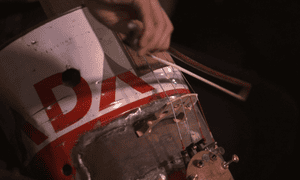
The Recycled Orchestra of Cateura, also known as the Recycled Orchestra, is an orchestra formed in 2012 and composed of children from Paraguay in South America who play musical instruments made from scrap materials collected from the Cateura landfill. Cateura is located just outside the Paraguayan capital city, Asunción, and is home to 40,000 people living in a desperately poor neighbourhood. It is built on top of a landfill site which receives more than 1,500 tonnes of waste each day.
The orchestra originated in the “Sonidos de la Tierra” (Sounds of the Earth) program which was created and directed by Luis Szarán and coordinator Favio Chávez. Chávez was an ecological technician who began using the rubbish in the landfill to create instruments for the children in nearby neighbourhoods.
Today’s clip is of the orchestra playing their arrangement of Libertango, a composition by composer Astor Piazzolla. The tango is the national music (and dance) style of Argentina.
Listen to more music in the tango style here and here.
Hildur Gudnadóttir won her first Emmy for this score
This piece of music is called The Door, from the haunting soundtrack of the HBO / Sky UK mini-series, Chernobyl (age rating 15). The five-episode series dramatises the true story of the 1986 nuclear disaster at the Chernobyl Nuclear Power Plant, near the city of Pripyat in the north of the Ukrainian Soviet Socialist Republic, Soviet Union. The mini-series is based in large part on the recollections of Pripyat locals, as told by Svetlana Alexievich in her book Voices from Chernobyl.
The score was composed by Hildur Guðnadóttir (born 1982). Hildur is an Icelandic musician and composer. She has gained international recognition for her film and television scores.
Every sound heard in the Chernobyl score was captured from field recordings at an actual power plant including pumps, reactors and turbines. Hildur describes the process here:
“I recorded the building blocks for the soundtrack with field-recordist Chris Watson and score-producer Sam Slater at the Ignalina Power Plant in Lithuania, a decommissioned nuclear reactor in which the show was filmed. The vastness of the site directly influenced the score: ultimately no classical instruments were used, and instead the recordings were turned into music, where the only traditional instrumental element was my voice, which was subsequently processed using Impulse Responses recorded on the site. The show itself portrays the disaster with respect and realism, and I was adamant the score reflects this. I wanted to show the viewer how it would feel to be there, and to tell this story of fear, loss and, ultimately, human error.”
Hildur Gudnadóttir’s tense, eerie soundtrack plays an integral role in the success of the series.
Hildur is also a classically trained cellist, singer and choral music arranger.
A socially distanced performance of Barber’s Adagio for Strings by the Berlin Philharmonic, recorded in May 2020
Adagio for Strings is a work by Samuel Barber composed in 1936 and arranged for string orchestra from the second movement of his String Quartet, Op. 11.
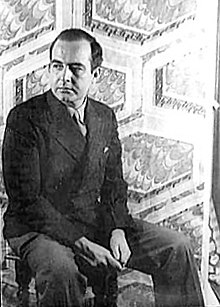
Samuel Barber in 1944.
Samuel Barber ( 1910- 1981) was an American composer of orchestral, opera, choral and piano music.
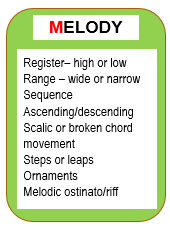
The piece builds on a melody that first ascends and then descends in a stepwise fashion.
The Adagio for Strings is arguably Barber’s best known work and has been performed on many public occasions, especially during times of mourning. It can also be heard on many film, television and game soundtracks. The work is extremely popular in the electronic dance music genre, notably in trance. Here is one such arrangement:








 Hayes Music blog