Ólafur Arnalds is an Icelandic multi-instrumentalist and music producer. His music mixes acoustic instruments with loops and samples, and has been used in the soundtracks for The Hunger Games and Broadchurch.
Daily listening Monday 20th April
This piece was released by drummer and bandleader Art Blakey in 1959. The style is hard bop, which is a subgenre of jazz. You’ll hear the really distinctive call and response at the start: this is the ‘head’ section of the piece, which returns at 12:34 after the trumpet, tenor sax, piano and bass have all had solo improvisation sections.
If you like this piece, find out more about it in this episode of the fabulous Strong Songs podcast.
Daily listening Sunday 19th April
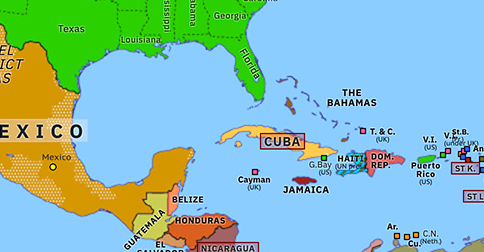
This piece was written by Mexican composer Arturo Márquez in 2005. Márquez often draws on traditional Mexican music and dance in his music, although the conga originates in Cuba.
Daily listening Saturday 18th April
This song was written in 1972 by David Bowie for his album The Rise and Fall of Ziggy Stardust and the Spiders from Mars. The album is very loosely a concept album, where Bowie’s alter ego Ziggy Stardust brings messages from extra-terrestrial beings. Starman brings a message of hope to the youth of Planet Earth.
Daily listening Friday 17th April
This piece was written in 1904 by Italian composer Vittorio Monti. It is based on the Hungarian folk dance the czárdás, which starts slowly and gradually gets faster. In Monti’s Czárdás, the sections alternate between slow and accelerando, and major and minor keys. From 2:56 you can hear the violinist playing stopped harmonics, where you press down normally on the string, but also (with a different finger) 5 semitones above, creating a note 2 octaves higher with a ‘ghostly’ tone.

Daily listening Thursday 16th April
Blue Suede Shoes was written by Carl Perkins in 1955, and recorded by Elvis Presley in 1956. It was one of the first rockabilly records, combining elements of blues, country, and the pop music of the time. It was also recorded by Buddy Holly and Eddie Cochran.
Daily listening Wednesday 15th April
This is one of the dances from Leonard Bernstein’s 1957 musical, West Side Story, which is a retelling of Romeo and Juliet set in New York, with rival Puerto Rican and white gangs. The mambo originated in Cuba in the 1940s. This is possibly the most fun that you could ever have in an orchestra!
Here is a video showing the choreography for the Mambo, from the 2009 Broadway production of West Side Story:
Daily listening Tuesday 14th April
This song was written in 1967 by John Lennon for a TV broadcast called Our World, which was the first ever live, international satellite TV arts broadcast. The 2 hour programme had segments from different countries, featuring opera star Maria Callas and painter Pablo Picasso. The Beatles were the UK contribution.
The song features quite a few musical quotations. It begins with the opening of La Marseillaise, the French national anthem, and also includes Glenn Miller’s In The Mood, the traditional song Greensleeves, Bach’s Invention No.8 in F, and the Beatles’ own song She Loves You.
Daily listening Monday 13th April
Perhaps one of the most famous openings of any classical piece, Also sprach Zarathustra (Thus Spake Zarathustra) was written in 1896 by Richard Strauss. The piece is a tone poem based on a book by Nietzsche. The complete piece lasts for an hour, but is not nearly as well known as its opening, which represents the sunrise. This performance features some particularly flamboyant cymbal playing!
It became famous for its use in Stanley Kubrick’s 1968 film, 2001: A Space Odyssey, and is now forever associated with space:
There is also this awesome jazz version:
Daily listening Sunday 12th April
Louis Armstrong (1901-1971) had a remarkable career as a jazz musician right from its beginnings in New Orleans in the 1920s up until the 1960s. Nicknamed ‘Satchmo’ (short for Satchelmouth owing to his particular way of playing the trumpet), Armstrong was a trumpeter, singer and actor and was at the forefront of lots of new ideas, for example scat singing, which you can hear him doing in this video:

