Chichester Psalms was written in 1965 by Leonard Bernstein, who also wrote West Side Story (see our previous post on Mambo). You can hear the same infectious rhythms in this piece once the fast section starts around 0:42. It’s quite difficult to sing as the harmonies are difficult and the choir parts have a very wide range.
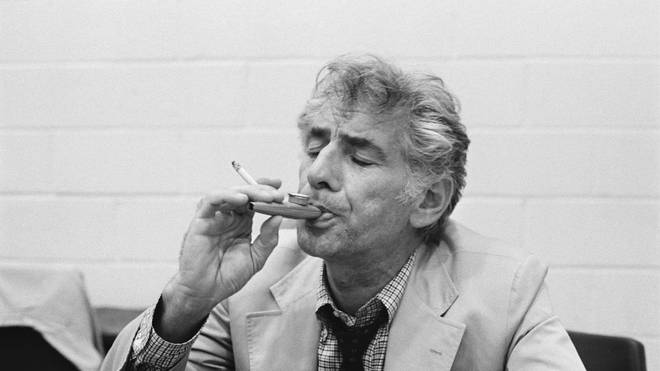
Leonard Bernstein (1918-1990) was a colourful character who led an extremely interesting life as a composer, conductor, pianist, author, and lecturer. Here is a great pic of him (we don’t condone smoking, but it’s great to see a ‘serious’ musician playing a kazoo!):
17-year-old Sheku Kanneh-Mason won the BBC Young Musician competition in 2016, and has gone on to have a stellar career, playing at the Proms, the Royal Variety Performance, and Prince Harry and Meghan’s wedding. Here he is playing one of the core pieces of the cello repertoire, the Prelude from J.S.Bach’s Solo Cello Suite No.1. This was composed between 1717 and 1723, making it a Baroque piece:
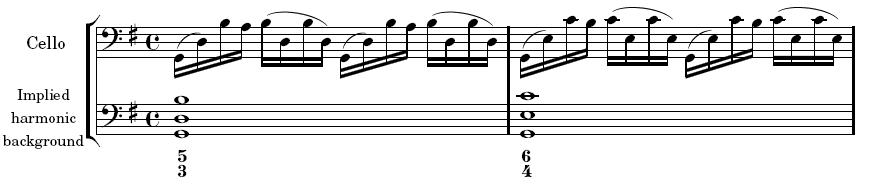
It is quite complicated to play! However, it is a great example of how you can make a complex pattern out of simple chords. This is the opening:
Eminem was the first hip hop artist to win an Oscar for Best Original Song, with this song in 2002. It is from the movie 8 Mile, in which Eminem plays a fictionalised version of himself, showing how he overcame various barriers before finally gaining the respect of the hip hop community.
In this piece, Christoph Sietzen plays a marimba (wooden keys) and a vibraphone (metal keys). As is common when playing these instruments, he uses four beaters: part of the skill is being able to control the distance between the two beaters in each hand, as well as the amazing hand-eye co-ordination required to play music this fast.
Here is another piece for marimbas, where the performers play drums as well:
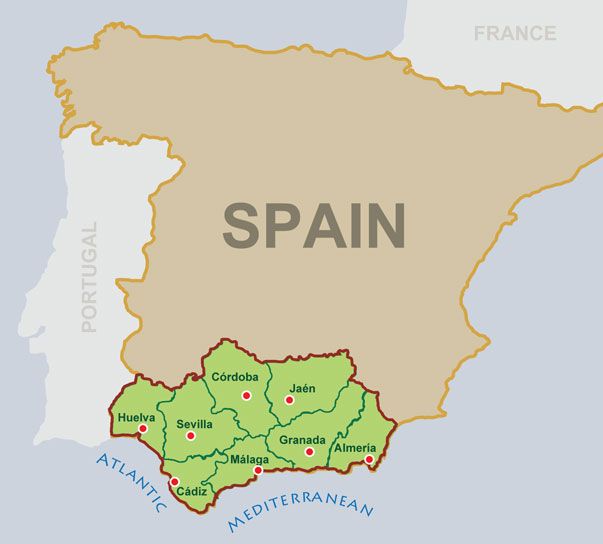
Flamenco is specific to southern Spain and the region of Andalucia. It has a range of influences which include Romani and northern African.
The music is very complex and uses its own system of rhythms (compás) and scales. This is the ‘Flamenco mode’ which is an altered version of the Phrygian mode:
The music always features a guitar and may also have singing and very complicated clapping patterns. Of course, it’s not just a musical style: the dance is absolutely essential too!
This is our second klezmer piece: the first was back on 4th April. Klezmer is is a Jewish style originating in Eastern Europe. As well as having its roots in Jewish folk music, there are elements of Romani music (because Jews and Roma lived in the same communities in Eastern Europe), and jazz.
In this piece you’ll notice the exuberant clarinet playing, that is a real feature of klezmer, and the accordion with buttons on both sides (it’s similar to a bandoneón, but this isn’t one of those – notice it’s a different shape). The big woodwind instrument on the stand is a bass clarinet.
Shalom aleichem is a Hebrew title meaning ‘peace be upon you’, which is a common greeting among the Ashkenazi Jews of central Europe.
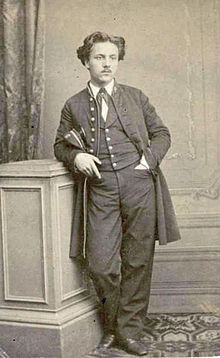
French composer Gabriel Fauré wrote this piece in 1864 when he was just 19 years old. He entered it into a composition competition and won first prize. When you hear how beautiful the music is, you can see why it won!
The words are by a C17th French playwright, Jean Racine, and are a French paraphrase of a medieval Latin hymn.
Words
Verbe égal au Très-Haut, notre unique espérance,
Jour éternel de la terre et des cieux,
De la paisible nuit nous rompons le silence:
Divin Sauveur, jette sur nous les yeux.
Répands sur nous le feu de ta grâce puissante,
Que tout l’enfer fuie au son de ta voix;
Dissipe le sommeil d’une âme languissante
Qui la conduit à l’oubli de tes lois.
Ô Christ, sois favorable à ce peuple fidèle,
Pour te bénir maintenant rassemblé;
Reçois les chants qu’il offre à ta gloire immortelle,
Et de tes dons qu’il retourne comblé.
Words Medieval Latin hymn
Translation
Word equal to the All-High, our only hope of heaven,
Eternal Dayspring of the earth and sky,
We break the silent calm of the untroubled even:
Saviour divine, bend upon us thine eye.
Of thy triumphant grace pour over us the fire
That, when thou dost but speak, all hell confounds;
Dispel the lethargy of souls whose weak desire
Oft makes them of thy laws transgress the bounds.
O Christ, benignly view this faithful congregation,
Met now their edifice of praise to build;
Receive their proffered hymns, accept their true oblation,
And send them home with all thy bounty filled.
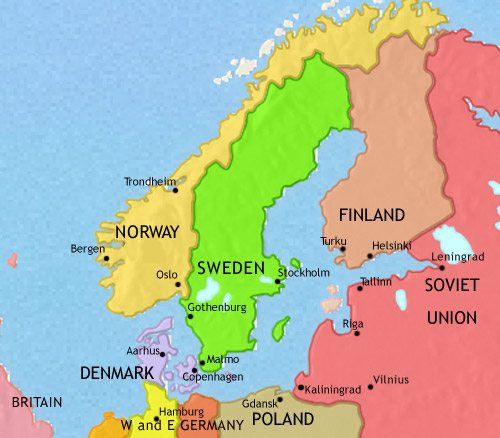
Swedish group ABBA released this iconic song in 1976. Like pretty much every song that is still popular a long time after it was created, it has survived because it is a truly excellent piece of music. ABBA’s songwriters, Björn Ulvaeus and Benny Anderson, were brilliant songwriters, and their singers, Agnetha Fältskog and Anni-Frid Lyngstad, were brilliant singers. Their songs were superbly orchestrated and produced.
This song is one of ABBA’s disco-style songs, with a lush, multi-layered approach reminiscent of Phil Spector’s ‘wall of sound‘. The song’s success rests on its killer combination of fabulous hooks and bittersweet twists.
To listen to a brilliant podcast which talks through exactly how this song is put together, go to Strong Songs.
This piece follows on from Vivaldi’s take on winter yesterday. This is Winter from Astor Piazzolla’s Cuatro Estaciones Porteñas,written in 1969. Piazzolla was an Argentinean composer who pioneered the ‘tango nuevo’ style, which put a more modern spin on traditional tango music. Tango is the national style of Argentina.
In this piece, you will see the traditional Argentinean instrument the bandoneón. This is a type of accordion with buttons on both sides. It is extremely difficult to play, as you get different notes depending on whether you are pushing or pulling. This is Astor Piazzolla playing his bandoneón:
We have already had some tango in our daily listening: compare this piece with our post from 27th March.
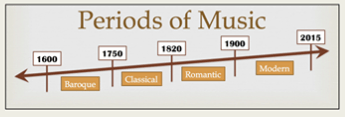
Antonio Vivaldi was a priest and composer who worked in Venice at in the first decades of the 18th century, putting him into the Baroque period:
The Four Seasons (Le quattro stagioni) is a set of four concertos for violin, with one for each season, written around 1716. A concerto is a piece for a solo instrument (in this case the violin) with orchestral backing. Typically for the Baroque period, the orchestra in this piece consists only of stringed instruments together with a harpsichord:
There are lot of things in the music that bring to mind an icy winter’s day.
In 2012, Max Richter ‘recomposed’ The Four Seasons. He discarded around 75% of Vivaldi’s music, and applied phasing and looping to what he kept, to give it a post-modern, minimalist feel. Here is his version of Winter – compare it with Vivaldi’s original.