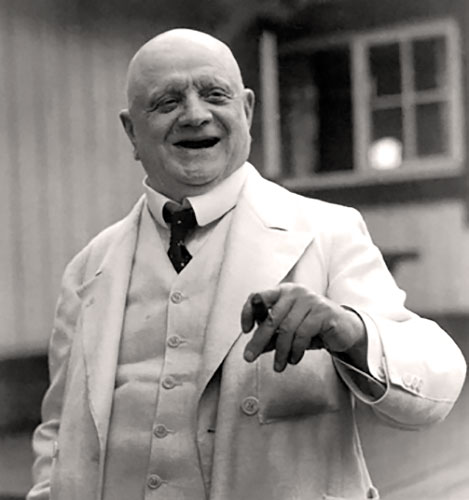
This piece was written by Finnish composer Jean Sibelius in 1915. Sibelius is a hero of the Finnish people for giving them a national musical identity, and his birthday is a national holiday.
The epic theme played by the french horns at 1:12 was said to be inspired by the sight of a flight of swans. HOLD ON for one of the most monumental key changes in all music at 2:05!!
Just as the tango is the musical blood of Argentina, bossa nova is part of Brazil’s musical soul. Garôta de Ipanema, or The Girl From Ipanema, is sung here by Astrud Gilberto mostly in Portuguese. If you want to know why Brazilians speak Portuguese when most of South America speaks Spanish, click this link.
So this is what life is like for the musicians providing the music for a West End show. In a show like Hamilton, which is through-sung (i.e. there is no spoken dialogue), the musicians are playing all the time during the show. This is a feat of concentration and musical stamina, especially when there are 8 performances every week.
Notice a few things about the technology they are using: their sheet music is on big iPad-like screens where pages will turn automatically or with a foot switch. The keyboard player has different things plugged into their keyboard which gives them the ‘patches’ or different sounds they will need.
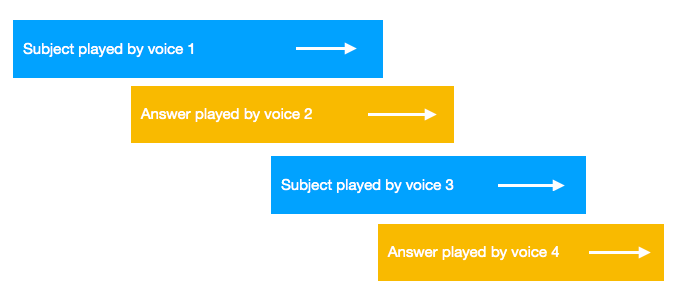
Possibly the most famous piece of organ music ever written, Johann Sebastian Bach composed Toccata and Fugue in D minor at some point in the first half of the 18th century. A toccata is a piece featuring lots of short, fast notes, while a fugue is a polyphonic structure where the main melody or ‘subject’ comes in each part in turn:
The fugue here starts around 4:30.
You can see in the video the organist using four manuals (keyboards) and the pedal board (which is just like another keyboard for your feet). Playing the organ is a real feat of co-ordination! All of the switches and buttons you can see on the sides of the manuals are so that you can choose the different sounds for each manual.
The piece has been orchestrated by Leopold Stokowski and appears in the legendary 1940 Disney film Fantasia:
Here is John Williams’ iconic theme from Jaws – perhaps one of the most famous pieces of film music ever. There are lots of interesting things about it:
The very first instrument that you see in this video is a contrabassoon – the big brother of the bassoon.
Listen for how the music starts off with just one note, and then gradually adds more
As soon as the second note is added, we recognise the music: this is proof of just how economical – and effective – the music is
In the film, the music is often used to represent the shark even when we can’t see it. The music tells us everything we need to know – we don’t need to see it on the screen as well.
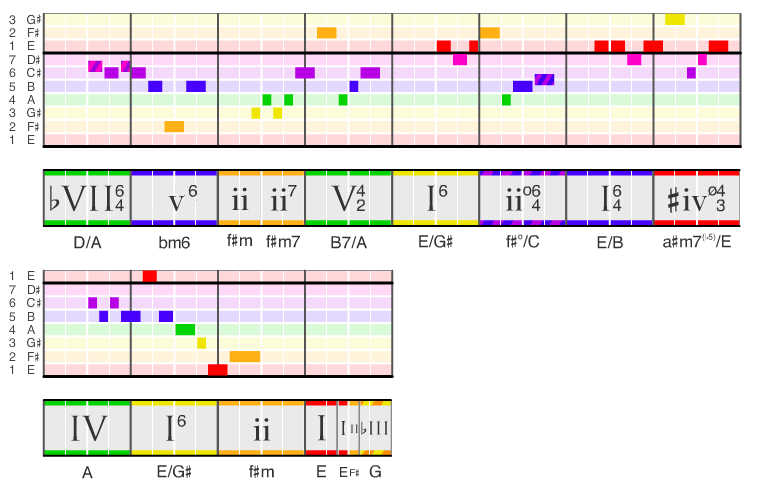
This song was released in 1966 by the Beach Boys on their seminal album Pet Sounds.
It is commonly listed in top 10s of the best songs of all time. So, what makes it so good?
The unique sound is created by a very unusual combination of instruments (unfortunately you can’t see them in this video!): there is French horn, harpsichord, accordion, flute, a string quartet, and a rhythm section played mostly on plastic cups and sleigh bells (there is hardly any conventional drum kit in the song)
It is very harmonically complex. Here is a representation of the chords and melody:
When you compare this to a lot of more modern songs (think of New Rules by Dua Lipa, which has two chords repeated throughout, or Shape of You by Ed Sheeran and Crown by Stormzy, both of which have four chords repeated throughout), this is massively inventive and quite elusive: it is difficult to pin down exactly what key it’s in.
It is structurally unusual: it doesn’t really have a chorus, and finishes with a round (which in itself is very rare in a pop song)
If you would like to find out more about exactly how this song was put together, listen to this podcast, which unpicks it in a detailed but accessible way.
This song is in the klezmer style, which is a Jewish style originating in Eastern Europe. As well as having its roots in Jewish folk music, there are elements of Romani music (because Jews and Roma lived in the same communities in Eastern Europe), and jazz.
Things to notice:
The exuberant clarinet playing, with lots of scoops and slides, is characteristic of klezmer
The alternating major and minor key sections
The lyrics in Yiddish (a language derived from German, spoken by Ashkenazi Jews in central Europe). They tell the story of Yidl the violinist and Aryeh the bass player, who cheer up a sad goat and a lonely bird with their music
This symphony was written in 1886, so it is from the Romantic period:
As is typical of the Romantic period, there is a huge orchestra, but the unusual additions here are piano and an organ. This performance is from the Proms, so was performed in the Royal Albert Hall, which has a huge (and very loud) pipe organ. You will notice that the organist has to sit with his back to the conductor – he has a rear-view mirror so that he can see what’s going on.
If you think you’ve heard this music before, it might be because it was adapted for the film Babe: