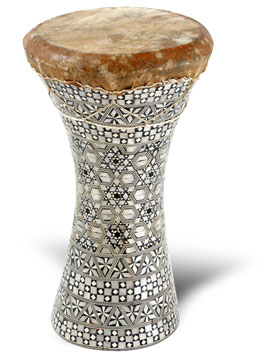
Amal Hijazi is a Lebanese singer. The title of this song means ‘time’, and the lyrics are sung in Arabic. The style is Arabic pop, and uses a lot of traditional middle eastern instruments including the doumbek:
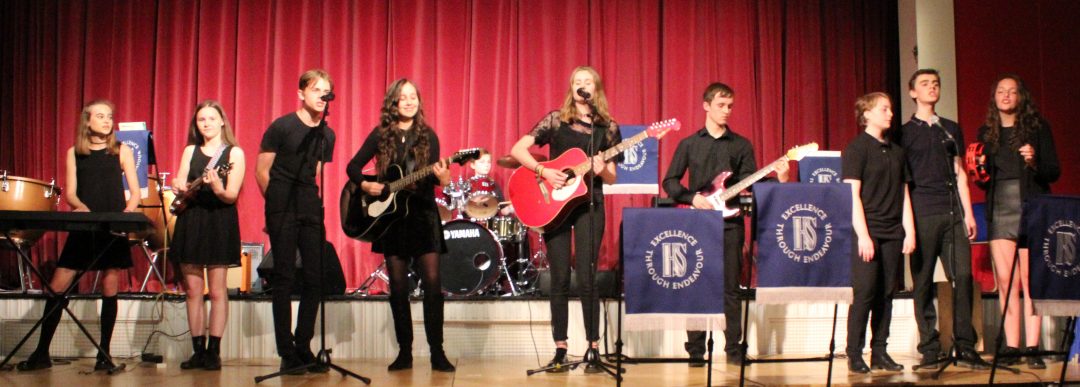
Everything musical that's going on at Hayes School
Amal Hijazi is a Lebanese singer. The title of this song means ‘time’, and the lyrics are sung in Arabic. The style is Arabic pop, and uses a lot of traditional middle eastern instruments including the doumbek:
Pink Floyd released this song in 1973 on their legendary album Dark Side of the Moon. There are lots of interesting things about this song. Most of the song has 7 beats in a bar, which is very unusual for a rock song. The music goes into 4 beats in a bar for the guitar solo, because guitarist David Gilmour was unsure whether he could play a solo counting in 7. The album cover for Dark Side is iconic:
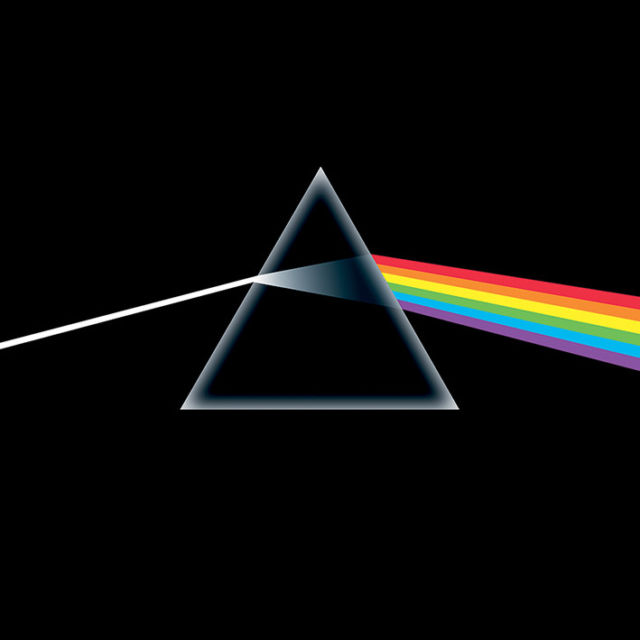
The album is also considered to be one of the best produced and mixed records ever: most recording studios keep a copy of it to use as reference, as it is regarded as a pinnacle of the art of record making.
The money sound effects at the start of the song that create a rhythmic ostinato were recorded in an interesting way. 1973 was well before digital sampling made this kind of thing easy! The money sounds were recorded onto tape in Roger Waters’ shed, and then 7 sections of tape of equal length (to make 7 beats in a bar) were cut out and made into a loop, which was run out of the tape machine and round a mic stand. This documentary describes the process (starting at 2:42)
Carmina Burana was written in 1936 by German composer Carl Orff. In this video the focus is on the timpani player, who has a lot to do in this piece! The timpani part really helps with making the music sound dramatic and imposing.
If you like the idea of playing timpani, try playing along with this video:
STOMP came about in Brighton in the 1990s, and is a physical theatre show where the performers make music using body percussion and everyday objects. It takes practice and skill – and a great sense of rhythm!
Join in with STOMP performer Ollie’s body percussion tutorial here:
Ollie is live on YouTube every day at 11:00 for body percussion tutorials. Here is a link
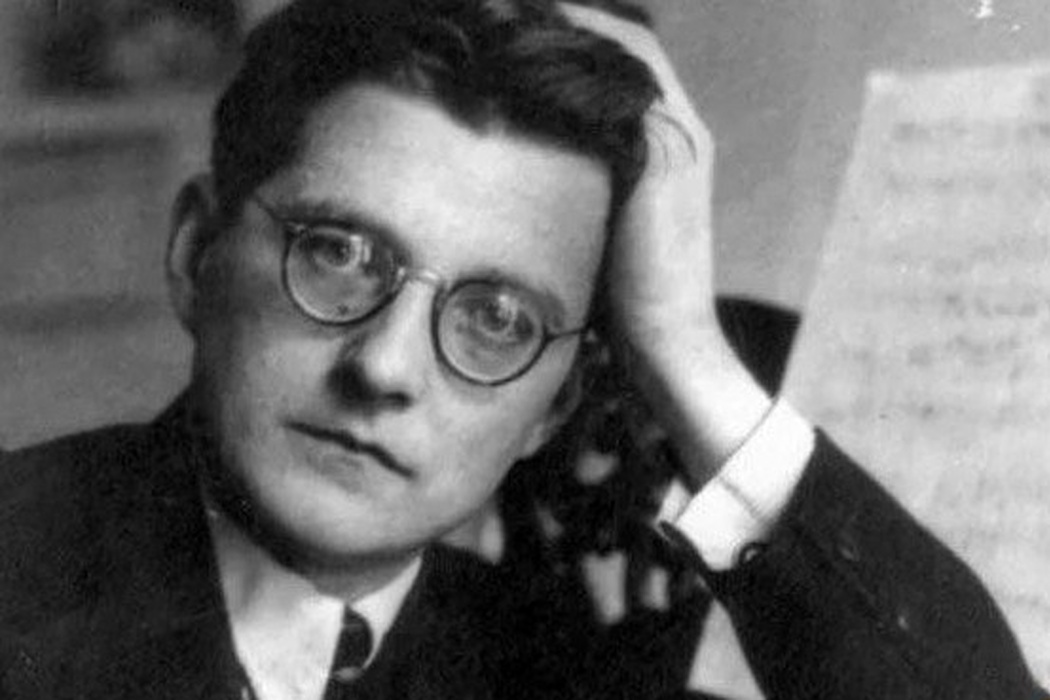
This piece was written in the 1950s by Russian composer Dmitri Shostakovich. It was lost until it was revived in the 1980s (Shostakovich died in 19750 and is now a really popular piece, because of its great melody.
What makes this a waltz?
This piece was used in the films Eyes Wide Shut, Batman v Superman (Dawn of Justice) and Bad Santa.
This tango was originally written as a song in 1935 by Carlos Gardel. The original lyrics are about horse racing – but this is an analogy and it is really about relationships. The tango is the national music (and dance) style of Argentina; Argentinians think of tango as the blood that runs through their veins – it is very much a part of their national identity.

This version was recorded by Scottish violinist Nicola Benedetti in 2012. In the video you can see some tango dancing, and also the accordion being played – although the accordion in the video is not a traditional Argentinian one. Argentinian accordions are called bandoneons, and have buttons on both sides. They are notoriously difficult to play, as you get different notes depending on whether you are pushing or pulling! Here is a version of Por una cabeza played on a banoneon:
This piece has been used in the films True Lies, Scent of a Woman, and Schindler’s List.
Sona Jobarteh is a Gambian/British Griot – Griots are West African storytellers and musicians with a rich tradition passed down through families. Sona is the first professional female kora player. A kora is a 21-string harp-like instrument. Here she performs a traditional song from Mali.
Written for the 1962 Bond film Dr No, this has become a truly iconic film theme. Although here it is credited to John Barry, who actually wrote it has been a matter of debate. It is usually credited to Monty Norman, who won a court case establishing that it was he who actually wrote the theme.
Things to notice:
Sabre Dance is part of a ballet composed by Armenian composer Aram Khachaturian in 1942. The middle section of the piece is based on an Armenian folk tune.
Armenia was part of the Soviet Union at the time. It is to the east of Turkey, south of Georgia, and north of Iran:

This song was originally recorded in 1971 and was a response to police brutality during an anti-war protest (this was the time of the Vietnam War, and a lot of people were protesting against American involvement in the war). Here are the lyrics:

