Daily listening Thursday 2nd July

Concierto de Aranjuez (Adagio) By Joaquin Rodrigo. John Williams (guitar), Paul Daniel (conductor) and the BBC Symphony Orchestra at the 2005 Proms.

This is the second movement (Adagio) from the Concierto de Aranjuez, a guitar concerto written by Joaquín Rodrigo in 1939. Rodrigo was a Spanish composer and a virtuoso pianist who lived from 1901 – 1999. This composition is Rodrigo’s best-known work and established his reputation as one of the most significant Spanish composers of the 20th century.
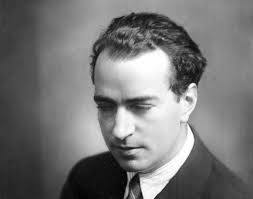
Joaquín Rodrigo: Music, Life and Literature | SPAIN arts & culture ...

Things to listen out for:

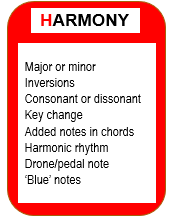
The harmony: it is in a minor key

The tempo: slow pace. Adagio means ‘slowly’ in Italian.
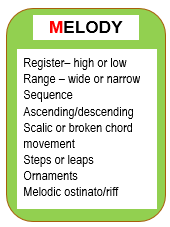
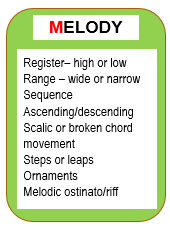
The melody: It is quietly played and introduced by the cor anglais with a soft accompaniment by the guitar and strings. The cor anglais (or English horn in North America), is a double-reed woodwind instrument in the oboe family. Ornamentation is added gradually to the melody. Ornamentation is when notes are added to a melody to decorate it.

Many musicians have since reinterpreted the work such as the jazz musician Miles Davis:

An arrangement of the piece by Kevin Bolton for a brass band led by a flugelhorn was recorded by the Grimethorpe Colliery Band as part of the soundtrack to the excellent 1996 film, Brassed Off (age rating 15). The film is about the troubles faced by a colliery brass band, following the closure of their pit (coal mine). This arrangement is sometimes referred to in jest as the Concierto d’Orangejuice, due to the pronunciation used in the film by actor Pete Postlethwaite.
Daily listening Wednesday 1st July

The Partita No. 3 in E major for solo violin was composed by Johann Sebastian Bach. Today’s piece is the first movement, Preludio (a short introduction).

  1. Preludio
  2. Loure
  3. Gavotte en Rondeau
  4. Menuets (I and II)
  5. Bourrée
  6. Gigue

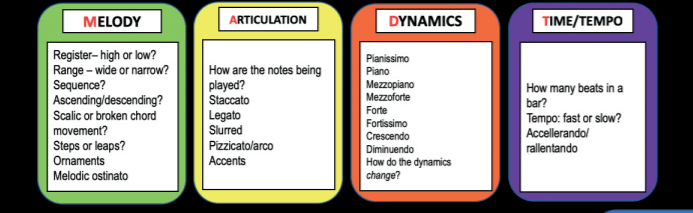
Bach based the composition on the characters of various dances and set the tone with the high-spirited Preludio. The Preludio is noble, dignified and stately, and refers to French court music. Listen out for the subtle changes in dynamics, ascending and descending sequences, the fast tempo and the use of very short notes (semi-quavers) throughout the piece.

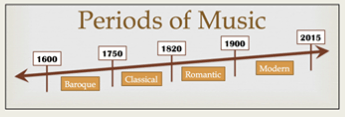
Johann Sebastian Bach (1685 – 1750) was a German composer, organist, harpsichordist, violist, and violinist of the Baroque period.

He is regarded by many as one of the greatest composers of all time and has arguably had the biggest impact on the music that followed. Many top conductors, composers and performers name him as their biggest influence.

Listen to more Bach here:

https://hayesmusic.blog/2020/04/30/daily-listening-thursday-30th-april/

https://hayesmusic.blog/2020/04/08/daily-listening-wednesday-8th-april/

How Bach's anatomy may have handed him greatness | National Geographic

Daily listening Tuesday 30th June

This recording starts with a short discussion about the origins and purpose of the Recycled Orchestra Project. Their performance of begins at 1 min 45.

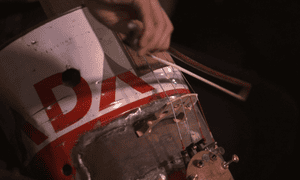
The Recycled Orchestra of Cateura, also known as the Recycled Orchestra, is an orchestra formed in 2012 and composed of children from Paraguay in South America who play musical instruments made from scrap materials collected from the Cateura landfill. Cateura is located just outside the Paraguayan capital city, Asunción, and is home to 40,000 people living in a desperately poor neighbourhood. It is built on top of a landfill site which receives more than 1,500 tonnes of waste each day.

Tunes from Trash Physical Science Article for Students ...

The orchestra originated in the “Sonidos de la Tierra” (Sounds of the Earth) program which was created and directed by Luis Szarán and coordinator Favio Chávez. Chávez was an ecological technician who began using the rubbish in the landfill to create instruments for the children in nearby neighbourhoods. 

Today’s clip is of the orchestra playing their arrangement of Libertango, a composition by composer Astor Piazzolla. The tango is the national music (and dance) style of Argentina.

Listen to more music in the tango style here and here.

The Recycled Orchestra joined heavy metal band Metallica on its South American tour last year.
In a community like Cateura, a violin is worth more than a house.
Landfill Harmonic: An Upcoming Documentary About the 'Recycled ...
Landfill Harmonic – Creating Beautiful Music on Instruments Made ...

Daily listening Monday 29th June

Hildur Gudnadóttir won her first Emmy for this score

This piece of music is called The Door, from the haunting soundtrack of the HBO / Sky UK mini-series, Chernobyl (age rating 15). The five-episode series dramatises the true story of the 1986 nuclear disaster at the Chernobyl Nuclear Power Plant, near the city of Pripyat in the north of the Ukrainian Soviet Socialist Republic, Soviet Union. The mini-series is based in large part on the recollections of Pripyat locals, as told by Svetlana Alexievich in her book Voices from Chernobyl.

The score was composed by Hildur Guðnadóttir (born 1982). Hildur is an Icelandic musician and composer. She has gained international recognition for her film and television scores.

Every sound heard in the Chernobyl score was captured from field recordings at an actual power plant including pumps, reactors and turbines. Hildur describes the process here:

“I recorded the building blocks for the soundtrack with field-recordist Chris Watson and score-producer Sam Slater at the Ignalina Power Plant in Lithuania, a decommissioned nuclear reactor in which the show was filmed. The vastness of the site directly influenced the score: ultimately no classical instruments were used, and instead the recordings were turned into music, where the only traditional instrumental element was my voice, which was subsequently processed using Impulse Responses recorded on the site. The show itself portrays the disaster with respect and realism, and I was adamant the score reflects this. I wanted to show the viewer how it would feel to be there, and to tell this story of fear, loss and, ultimately, human error.”

Hildur Gudnadóttir’s tense, eerie soundtrack plays an integral role in the success of the series.

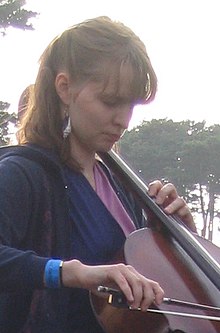
Hildur Guðnadóttir in 2007
Hildur is also a classically trained cellist, singer and choral music arranger.

Daily listening Sunday 28th June

A socially distanced performance of Barber’s Adagio for Strings by the Berlin Philharmonic, recorded in May 2020

Adagio for Strings is a work by Samuel Barber composed in 1936 and arranged for string orchestra from the second movement of his String Quartet, Op. 11.

Samuel Barber.jpg
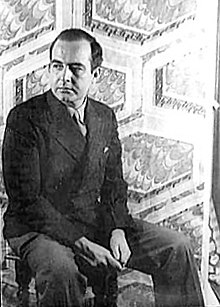
Samuel Barber in 1944.

Samuel Barber ( 1910- 1981) was an American composer of orchestral, opera, choral and piano music.

The piece builds on a melody that first ascends and then descends in a stepwise fashion.

The Adagio for Strings is arguably Barber’s best known work and has been performed on many public occasions, especially during times of mourning. It can also be heard on many film, television and game soundtracks. The work is extremely popular in the electronic dance music genre, notably in trance. Here is one such arrangement:

Daily listening Saturday 27th June

Hymn to St CeciliaOp. 27 is a choral piece by Benjamin Britten (1913–1976), a setting of a poem by W. H. Auden written between 1940 and 1942. Britten had wanted to write a piece dedicated to St Cecilia for a number of reasons. Firstly, he was born on St Cecilia’s day; secondly, St Cecilia is the patron saint of music; and finally, there is a long tradition in England of writing odes and songs to St Cecilia.

Edward Benjamin Britten (1913 – 1976) was an English composer, conductor, and pianist. He was a central figure of 20th-century British music and composed a range of works including opera, other vocal music, orchestral and chamber pieces. 

Britten composed the piece as three contrasting movements which are described here:

The three ‘movements’ are completely different from each other. The first has a kind of ‘ground bass’ moving through it started by the tenors in the first bar and passing between them and the basses. Over this bass, the upper parts sing flowing compound time phrases which are almost hymn-like. The refrain at the end of the verse is a unison version of the initial flowing melody sung by the sopranos.

The second section is a scherzo which gives Britten his ‘middle movement’ contrast. This is marked to be sung extremely quickly. A feeling of the ‘ground bass’ from the first section returns as a binding motif throughout this section in long notes.

The final section is more extended and begins with an ostinato bass which feels slightly menacing. Over this, Britten builds contrapuntal phrases in the upper parts with longer note values. Four solo voices are featured in the next section. The final refrain uses the familiar melody from the opening and brings the work to its quiet end.

Daily listening Friday 26th June

This piece, Tamacun, features on the album Rodrigo y Gabriela released in 2006

Rodrigo y Gabriela (Rodrigo and Gabriela) are a Mexican acoustic guitar duo whose music is influenced by a wide variety of genres (types of music) including modern flamenco, rock, and even heavy metal. The duo’s recordings consist largely of instrumental duets on the flamenco guitar like in today’s clip.

Flamenco is specific to southern Spain and the region of Andalucia. It has a range of influences which include Romani and northern African. The music always features a guitar and may also have singing and very complicated clapping patterns.

Listen to more flamenco music on the blog here.

Daily listening Thursday 25th June

Filmed in 1984

Here is a five-minute jazz improvisation played on two pianos by Oscar Peterson and Andre Previn. Oscar Peterson (1925 – 2007) was a Canadian jazz pianist, virtuoso and composer. He is considered to be one of the greatest jazz pianists and played thousands of concerts worldwide in a career lasting more than 60 years. André Previn (1929 – 2019) was a German-American pianist, composer, arranger, and conductor. He is described by many as one of the most charismatic and versatile musicians of his generation.

Jazz is a style of music which emerged in America around the turn of the 20th century. Jazz can be characterised by improvisations, syncopation and swing rhythms.

What to listen out for:

Improvised playing – this is a way of performing music that is not based on a written score. It is created spontaneously, but will often involve elements of prior preparation and planning. Both pianists are improvising over a repeated 12 bar chord pattern.

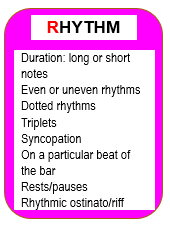
Syncopation – this is rhythm patterns where stressed notes are placed off the beat. Improvisations are often syncopated to make them feel jazzy.

Jazz often makes use of triplets and dotted rhythms to help the melodies flow as well as ornaments (short added notes) and accents (emphasising certain notes) to add interest.

The walking bass line – this is when the performer plays crotchets either ‘walking’ up the blues scale or arpeggio.

Daily listening Wednesday 24th June

KT Tunstall performing Black Horse & The Cherry Tree on the TV show Later… with Jools Holland in 2004. It was this live solo performance that proved to be the important break-though in her career.

Kate Victoria Tunstall (born 1975), known professionally as KT Tunstall, is a Scottish singer-songwriter and musician.  It is said that she had only 24 hours to prepare for the performance on today’s clip, having been asked to step in at short notice after the American rapper Nas cancelled.

Tunstall said of the song:

“Black Horse and the Cherry Tree” is inspired by old blues, Nashville psycho hillbillies & hazy memories. It tells the story of finding yourself lost on your path, and a choice has to be made. It’s about gambling, fate, listening to your heart, and having the strength to fight the darkness that’s always willing to carry you off.

The song featured on her 2005 debut album, Eye to the Telescope and it is one of many songs that reuses the famous Bo Diddley beat from the influential 1955 song Bo Diddley.

This image has an empty alt attribute; its file name is rhythm-mad.png

Listen out for this Bo Diddley beat as well as how she performs her song as a one-person band using a guitar, a tambourine, and a loop pedal.

Akai E2 Headrush Delay Looper Pedal For Sale in Rathmines, Dublin ...

Live looping is the recording and playback of a piece of music in real-time. Live looping has become increasingly popular as it offers the ability for a single musician to create multiple layers to their live music, resulting in a sound close to that of a “full band”.  You will have seen Ed Sheeran perform with a loop pedal, but today’s clip shows Tunstall doing this over 15 years ago.

Daily listening Tuesday 23rd June

Lang Lang and his father perform a duet at London’s Royal Albert Hall during the Proms in 2008. Lang Lang ( born 1982) is a Chinese concert pianist who has performed with leading orchestras all over the world.

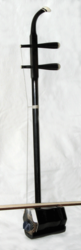
This unusual performance is an old Chinese tune called Sai Ma (Horse Race) composed by Huang Haihuai. Lang Lang is playing the piano and his father is playing an Chinese instrument called an erhu. The erhu is a two-stringed bowed musical instrument, sometimes known as the Chinese violin or a Chinese two-stringed fiddle.

Erhu.png
ErHu-The Chinese Violin | Learn music, Violin, Other ways to say

The erhu is used as a solo instrument as well as in small ensembles and large orchestras. In China it is used in both traditional and contemporary music arrangements (including pop, rock and jazz).