Daily listening Saturday 30th May

Rainy Days and Mondays” was released in 1971. The instrumental backing was by L.A. session musicians from the Wrecking Crew

The Carpenters were an American vocal and instrumental duo consisting of siblings; singer and drummer Karen (born 1950) and musician, record producer, songwriter, and music arranger Richard Carpenter (born 1946). The combination of Richard’s arranging and composing skills, together with Karen’s smooth, expressive contralto vocals lead them to become one of the biggest-selling American musical acts of all time.

contralto is a type of classical female singing voice whose vocal range is the lowest female voice type. Karen received much praise and admiration for her 3-octave contralto vocal range, and was listed among the American Rolling Stone magazine’s 100 greatest singers of all time.

I'm making a chart to show vocal ranges and would love some ...
C4 is middle C
The Carpenters - Wikipedia

Daily listening Friday 29th May

Billy Taylor Trio – I Wish I Knew How It Would Feel To Be Free, from I Wish I Knew How It Would Feel To Be Free, a live album released in 1968.

I Wish I Knew How It Would Feel to Be Free” is a jazz song written by Billy Taylor and Dick Dallas in the 1960s. Jazz is a style of music which emerged in America around the turn of the 20th century. The music can be characterised by improvisations, syncopations and swing rhythms.

Billy Taylor (1921 – 2010) was an American jazz pianist, composer, broadcaster and educator. He was passionate about jazz and spent much of his career as a jazz activist, successfully introducing a much wider audience to the jazz genre. He appeared on hundreds of albums and composed more than 300 songs during his career, which spanned over six decades. Today’s song is his most famous and achieved popularity with the civil rights movement of the 1950s and 1960s. 

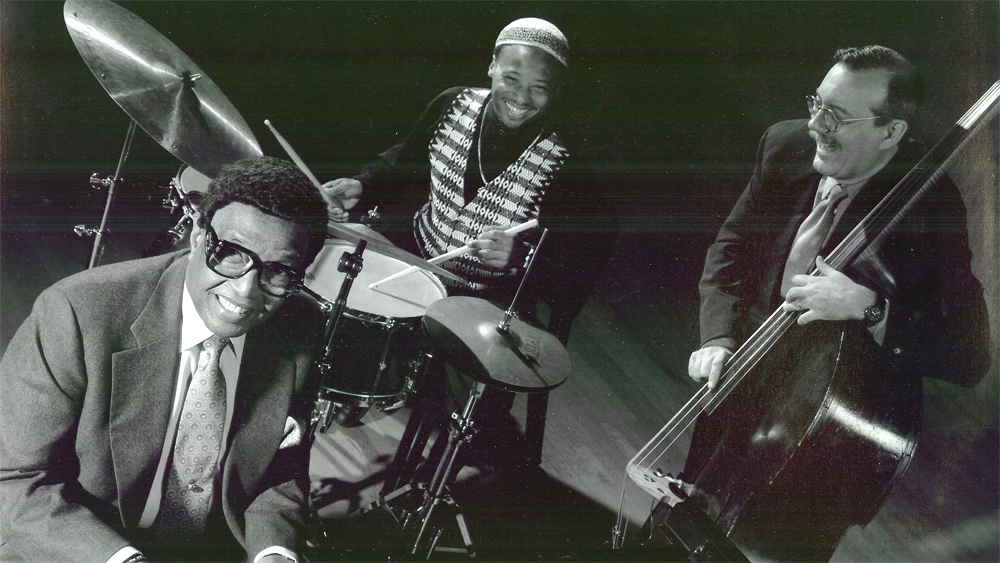
The trio is one of the common choice of line ups by jazz performers. It consists of the:

  • piano
  • bass
  • drums
NPR Remembers Billy Taylor : A Blog Supreme : NPR

There are many different recordings of this song, the most famous perhaps being that of Nina Simone’s cover version from her 1967 album Silk & Soul.

Daily listening Thursday 28th May

The third movement from Borodin’s String Quartet No. 2 in D major.

Alexander Borodin (1833 – 1887) was a Russian chemist and musical composer from the Romantic era. He wrote this string quartet during 1881. A string quartet is a musical ensemble consisting of four string players – two violin players, a viola player and a cellist. A viola is a string instrument, larger than a violin and with a thicker and darker tone.

Traditional Instruments | History of the String Quartet

Today’s piece is the 3rd movement of the string quartet and is called Notturno (Nocturne). A nocturne is a musical composition that reflects the moods and feelings of night time.

Daily listening Wednesday 27th May

I Wish was originally released as a single in 1976

Stevie Wonder (born 1950) is an American singer, songwriter, musician and record producer. He is regarded as one of the most successful songwriters and musicians in the history of popular music. He has been a pioneer and influence to musicians of various genres of music including pop, rhythm and blues, soul, funk and rock.

Stevie Wonder began playing instruments at an early age, including piano, harmonica, and drums. Despite being blind from a very young age due to complications with being born prematurely, he has said in interviews that he never thought of being blind as a disadvantage. He was a child prodigy known as Little Stevie Wonder, and was first signed to a record label at the age of 11. He has since sold over 100 million records worldwide, making him one of the best-selling music artists of all time. Stevie Wonder is also known for his work as an activist for political causes.

The Jazz Soul Of Little Stevie | Discogs
One of (Little) Stevie Wonder’s first albums, originally released in September 1962. It is a fully instrumental album with Stevie Wonder playing organ and harmonica.

Things to listen out for:

  • The bass guitar and keyboard playing a unison walking bass line from the start of the intro and throughout the song.
  • Use of syncopation. Syncopation is a rhythmic device involving a mixture of on and off beats.
  • Call and response between Stevie’s vocals and the horn section (saxophones and trumpets).
  • Use of a synthesiser, first heard in the intro. The synth line plays a descending then ascending minor scale in the pre-chorus. See if you can hear it.
CS80-2.27.2014 copy
A synthesiser from the 1970s

Find out more about this song on this excellent podcast: (scroll down to Dec 2018)

https://strongsongspodcast.com/website

Daily listening Tuesday 26th May

Finale (The Dargason) from St Paul’s Suite in C Major (Op. 29, No. 2)

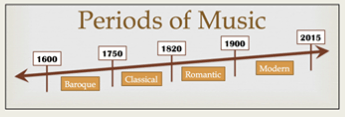
Gustav Theodore Holst ( 1874 – 1934) was an English composer, arranger and teacher from the modern period of music. He is best known for his orchestral suite The Planets but he also composed many other works across a range of genres, such as today’s piece which was written for string orchestra and published in 1922.

During Holst’s earlier years as a composer, he took interest in folk music, and wrote many pieces based on folk tunes and songs. Today’s piece begins with the folk tune “Dargason”, a 16th-century English dance tune, followed by “Greensleeves”, a traditional English folk tune, played by the cellos.

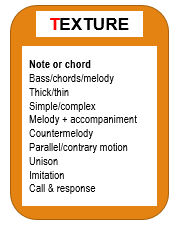
Listen out for the polyphonic texture (different independent melodies happening at the same time).

Daily listening Monday 25th May

Steel band music started in Trinidad and Tobago in the Caribbean. Calypso is a form of traditional music often played on steel pans. Calypso music has:

  • 4/4 time with syncopation (rhythm patterns where stressed notes are placed off the beat)
  • acoustic and bass guitar or band with trumpets, saxophones, electric guitars, drum kit and Latin percussion instruments
  • the melody often uses call and response in the chorus
  • simple harmony
  • structure consisting of verse, choruses and instrumental sections
  • topical, witty lyrics – often satirical

Steel bands are characterised by:

  • instruments (known as pans), which were originally made out of oil drums
The Original Trinidad Steel Band | Discography | Discogs
  • lead instruments known as tenors playing the melody
  • middle-pitched pans playing the chords (altos)
  • bass pans playing the lowest notes
  • a rhythm section for up tempo numbers including drums and percussion e.g. tambourines and maracas
  • sticks with ends padded with rubber bands
  • long notes played with a rolling tremolo effect (a trembling sound created by fast repetition of the same note)
  • smooth (legato) and expressive melodies

Yellow Bird‘ is a traditional 19th century folk song from the island of Haiti in the Caribbean. The song continues to be popularly associated with calypso and the Caribbean, and is often performed by steelpan bands.

Map of Caribbean

Daily listening Sunday 24th May

The Symphony No. 2 in E minor, Op. 27, is a symphony by the Russian composer Sergei Rachmaninoff, written in 1906–07 which puts it in the late Romantic period.

Sergei Rachmaninoff was a Russian composer, virtuoso pianist, and conductor. Following criticism of his first attempt at writing a symphony he suffered badly from depression. Fortunately, successful therapy allowed him to rediscover his love for music. His Symphony No.2 was composed in Dresden, Germany, where he and his family lived for almost four years from 1906. Rachmaninoff lacked confidence in his writing and it is said that he was very unhappy with the first draft of this piece. However, after months of revision he finished the work and conducted the premiere in 1908 to great applause and it has remained one of the most popular of all of his works. An excellent example of resilience and growth-mindset!

Sergei Rachmaninoff in 1921

A symphony is a long piece of music, in three or four movement, for a full orchestra.

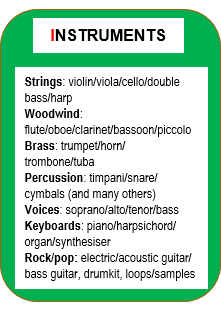
This symphony was originally scored for full orchestra with 3 flutes (the 3rd doubling on piccolo), 3 oboes (the 3rd doubling on cor anglais), 2 clarinets in A and B♭, bass clarinet in A and B♭, 2 bassoons, 4 horns, 3 trumpets, 3 trombones, tuba, timpani, snare drum, bass drum, cymbals, glockenspiel, and strings.

The symphony is in four movements:

  1. Largo — Allegro moderato (E minor)
  2. Allegro molto (A minor)
  3. Adagio (A major)
  4. Allegro vivace (E major)

Today’s extract is from the second movement.

Daily listening Saturday 23rd May

 “Sugar Baby Love” was The Rubette’s first song. It was released in 1974 and became an instant hit in the UK and USA.
It remains their best-known record. Perhaps it’s one for Jamsesh to perform – complete with choreography and matching outfits!

The Rubettes were a British pop group of studio musicians assembled in 1973. Their songs were influenced by doo-wop and 1950s American pop. Doo-wop is a genre of rhythm-and-blues and rock-and-roll vocal music that was popular in the 1950s and ’60s. The term doo-wop is derived from the sounds made by the group as they provided the background harmony for the lead singer. In this song the lead singer starts the melody using a vocal technique called falsetto. When a male singer sings in the soprano or alto range, he is singing falsetto. The voice type is known as countertenor.

Things to listen out for:

  • The pizzicato (plucked) strings
  • A spoken middle 8 section
  • The “Wall of Sound” recording technique

Phil Spector’s Wall of Sound technique was one of the first attempts to use the recording studio as an instrument in its own right. This was created through the use of large ensembles of musicians. Echo chambers were then used to produce the final rich and booming result that came across well through the radios and jukeboxes of that era. The Beach Boys often used Wall of Sound arrangements. You can hear this in their classic hit ‘God Only Knows’ on a previous blog post: https://hayesmusic.blog/2020/04/04/daily-listening-saturday-4th-april/

Daily listening Friday 22nd May

Jess Gillam was the first ever saxophone finalist in the BBC competition, Young Musician of the Year.

Darius Milhaud (1892 – 1974) was a French composer, conductor, and teacher. He was one of the most prolific composers of the 20th century. His compositions are influenced by jazz and Brazilian music and make extensive use of polytonality. Harmony that contains chords belonging to several different keys is described as polytonal.

Milhaud’s Scaramouche is a three-movement work based on incidental music written for a play. It is named after the Theâtre Scaramouche on the Champs Elysées in Paris, where the play was performed. In today’s piece, listen out for the offbeat rhythms (syncopation) and fast, energetic tempo typical of the samba music style from Brazil.

Find out more about the saxophonist Jess Gillam here: http://www.jessgillamsax.co.uk/

Daily listening Thursday 21st May

Eva Cassidy ( 1963 – 1996) was an American singer and guitarist. She had a diverse repertoire of jazz, blues, folk, gospel and pop.  Although she had been honoured by the Washington Area Music Association, she was virtually unknown outside her native Washington,D.C. Two years after her death, Cassidy’s music was brought to the attention of British audiences, when her versions of “Fields of Gold” and “Over the Rainbow” were played on BBC Radio 2. 

Following the overwhelming response on Radio 2, a black and white video of Cassidy interpreting Somewhere Over The Rainbow was shown on the BBC television show Top Of The Pops 2. The video prompted an unbelievable response, the greatest in the programme’s history. Her posthumously released recordings, including three number-one albums and one number-one single in the UK, have since sold more than ten million copies worldwide.

Eva Cassidy at Blues Alley in January 1996. Blues Alley is a jazz nightclub in Washington, D.C that despite its small size — capacity is only 124 people — has hosted jazz titans including Sarah Vaughan, Maynard Ferguson, Ella Fitzgerald, Dizzy Gillespie, Wynton Marsalis and on and on