A brilliant example of what is possible with just voices, and nothing else!
Daily listening Sunday 5th April
Here is John Williams’ iconic theme from Jaws – perhaps one of the most famous pieces of film music ever. There are lots of interesting things about it:
- The very first instrument that you see in this video is a contrabassoon – the big brother of the bassoon.
- Listen for how the music starts off with just one note, and then gradually adds more
- As soon as the second note is added, we recognise the music: this is proof of just how economical – and effective – the music is
- In the film, the music is often used to represent the shark even when we can’t see it. The music tells us everything we need to know – we don’t need to see it on the screen as well.
Daily listening Saturday 4th April
This song was released in 1966 by the Beach Boys on their seminal album Pet Sounds.
It is commonly listed in top 10s of the best songs of all time. So, what makes it so good?
- The unique sound is created by a very unusual combination of instruments (unfortunately you can’t see them in this video!): there is French horn, harpsichord, accordion, flute, a string quartet, and a rhythm section played mostly on plastic cups and sleigh bells (there is hardly any conventional drum kit in the song)
- It is very harmonically complex. Here is a representation of the chords and melody:
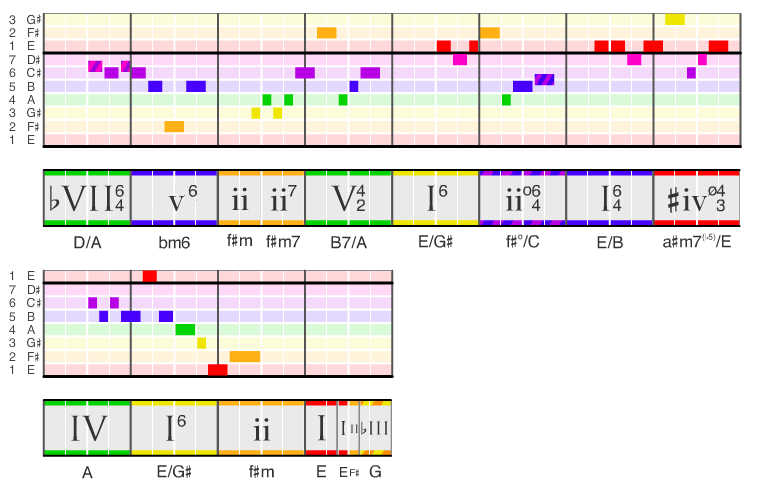
When you compare this to a lot of more modern songs (think of New Rules by Dua Lipa, which has two chords repeated throughout, or Shape of You by Ed Sheeran and Crown by Stormzy, both of which have four chords repeated throughout), this is massively inventive and quite elusive: it is difficult to pin down exactly what key it’s in.
- It is structurally unusual: it doesn’t really have a chorus, and finishes with a round (which in itself is very rare in a pop song)
If you would like to find out more about exactly how this song was put together, listen to this podcast, which unpicks it in a detailed but accessible way.
Daily listening Friday 3rd April
This song is in the klezmer style, which is a Jewish style originating in Eastern Europe. As well as having its roots in Jewish folk music, there are elements of Romani music (because Jews and Roma lived in the same communities in Eastern Europe), and jazz.
Things to notice:
- The exuberant clarinet playing, with lots of scoops and slides, is characteristic of klezmer
- The alternating major and minor key sections
- The lyrics in Yiddish (a language derived from German, spoken by Ashkenazi Jews in central Europe). They tell the story of Yidl the violinist and Aryeh the bass player, who cheer up a sad goat and a lonely bird with their music
- The unusual-shaped, space-saving double bass
- The characteristic oom-pah accompaniment
Daily listening Thursday 2nd April
This symphony was written in 1886, so it is from the Romantic period:

As is typical of the Romantic period, there is a huge orchestra, but the unusual additions here are piano and an organ. This performance is from the Proms, so was performed in the Royal Albert Hall, which has a huge (and very loud) pipe organ. You will notice that the organist has to sit with his back to the conductor – he has a rear-view mirror so that he can see what’s going on.
If you think you’ve heard this music before, it might be because it was adapted for the film Babe:
Daily listening Wednesday 1st April
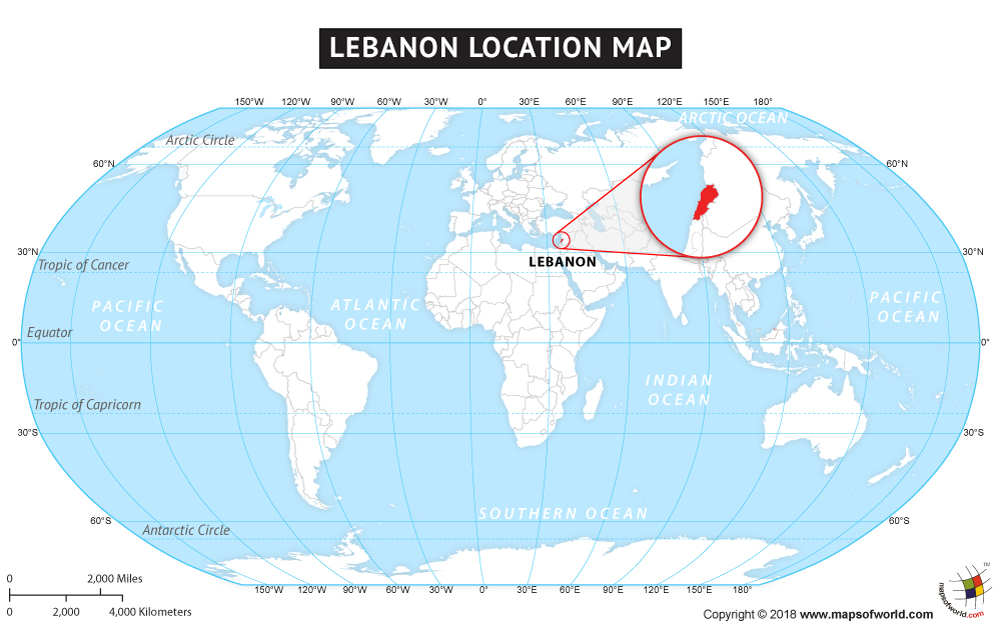
Amal Hijazi is a Lebanese singer. The title of this song means ‘time’, and the lyrics are sung in Arabic. The style is Arabic pop, and uses a lot of traditional middle eastern instruments including the doumbek:

Daily listening Tuesday 31st March
Pink Floyd released this song in 1973 on their legendary album Dark Side of the Moon. There are lots of interesting things about this song. Most of the song has 7 beats in a bar, which is very unusual for a rock song. The music goes into 4 beats in a bar for the guitar solo, because guitarist David Gilmour was unsure whether he could play a solo counting in 7. The album cover for Dark Side is iconic:
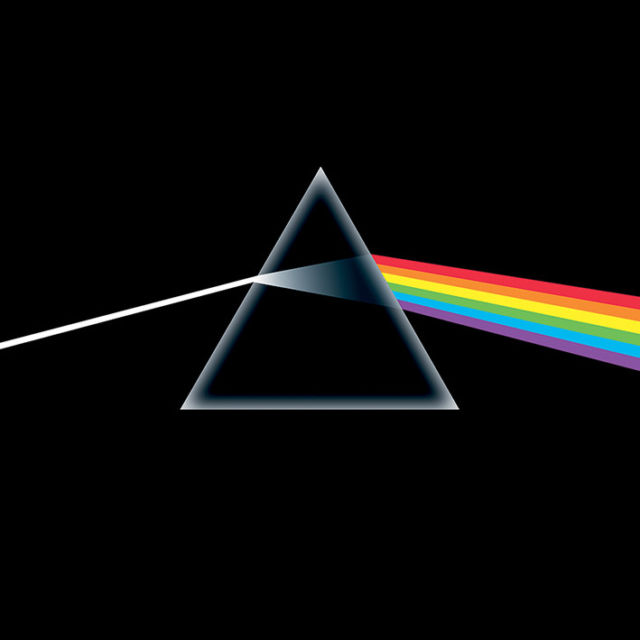
The album is also considered to be one of the best produced and mixed records ever: most recording studios keep a copy of it to use as reference, as it is regarded as a pinnacle of the art of record making.
The money sound effects at the start of the song that create a rhythmic ostinato were recorded in an interesting way. 1973 was well before digital sampling made this kind of thing easy! The money sounds were recorded onto tape in Roger Waters’ shed, and then 7 sections of tape of equal length (to make 7 beats in a bar) were cut out and made into a loop, which was run out of the tape machine and round a mic stand. This documentary describes the process (starting at 2:42)
Daily listening Monday 30th March
Carmina Burana was written in 1936 by German composer Carl Orff. In this video the focus is on the timpani player, who has a lot to do in this piece! The timpani part really helps with making the music sound dramatic and imposing.
If you like the idea of playing timpani, try playing along with this video:
Daily listening Sunday 29th March
STOMP came about in Brighton in the 1990s, and is a physical theatre show where the performers make music using body percussion and everyday objects. It takes practice and skill – and a great sense of rhythm!
Join in with STOMP performer Ollie’s body percussion tutorial here:
Ollie is live on YouTube every day at 11:00 for body percussion tutorials. Here is a link
Daily listening Saturday 28th March
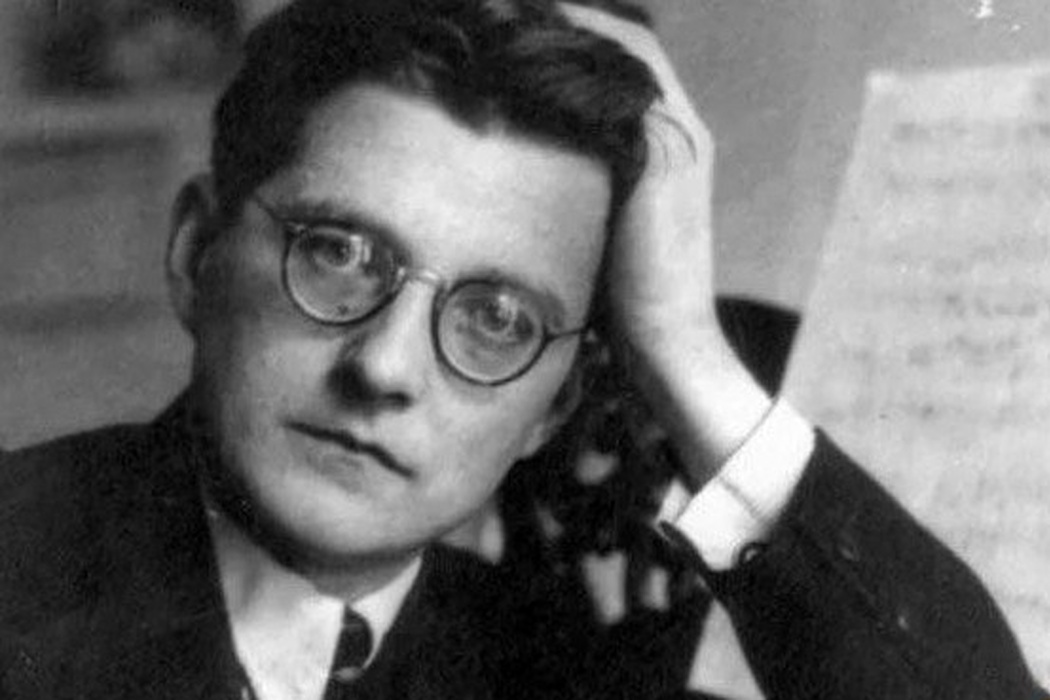
This piece was written in the 1950s by Russian composer Dmitri Shostakovich. It was lost until it was revived in the 1980s (Shostakovich died in 19750 and is now a really popular piece, because of its great melody.
What makes this a waltz?
- 3 beats in a bar
- Oom-cha-cha (bass note – chord – chord) accompaniment
- Contrasting sections in different keys (listen for how it starts minor and then goes into a major key, and back again)
- Long, lyrical melodies
- Expressive rallentandos (slowing up)
This piece was used in the films Eyes Wide Shut, Batman v Superman (Dawn of Justice) and Bad Santa.
 Hayes Music blog